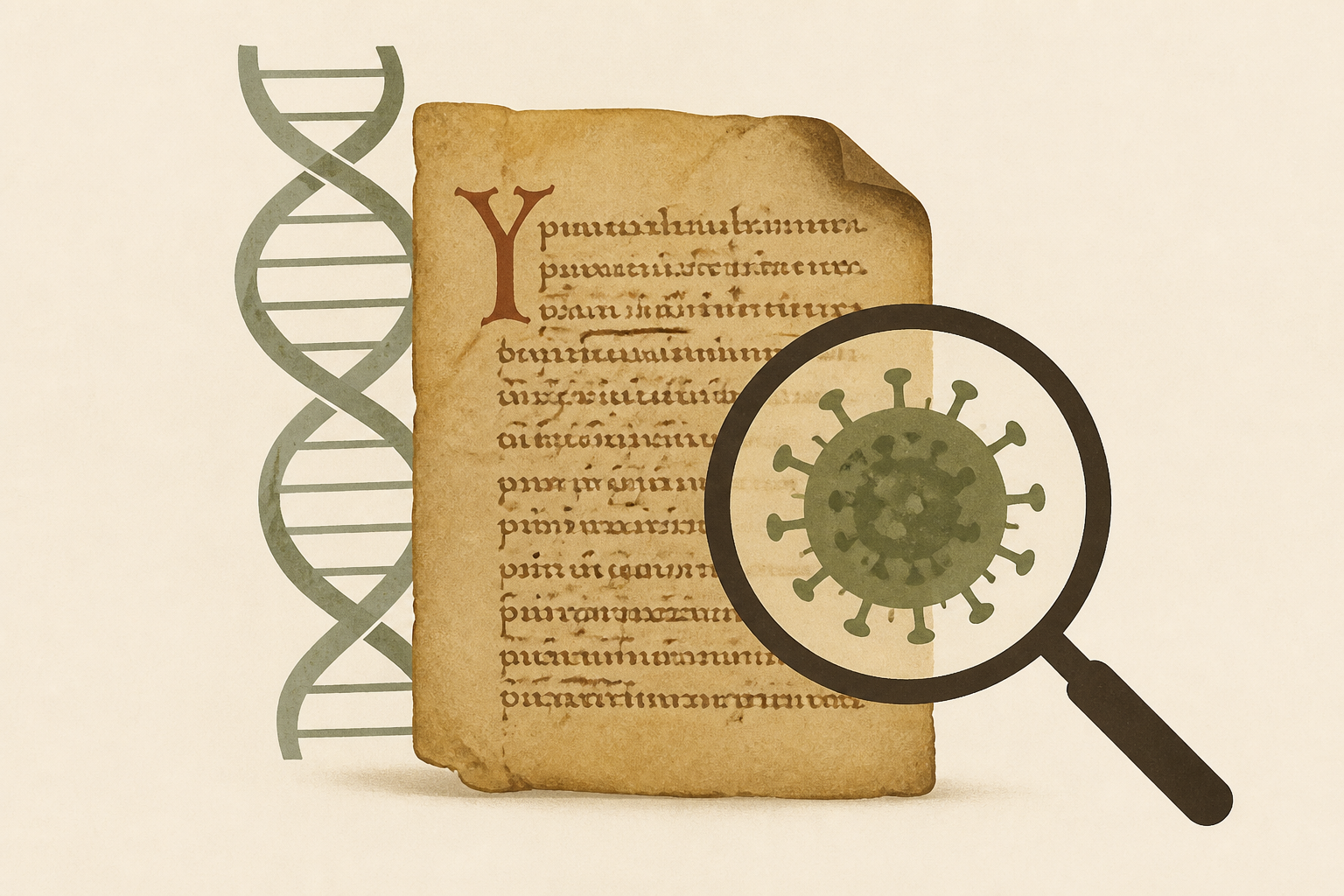
AI Image
York Gospels reveal ancient sheeppox virus that DNA preserved in parchment
foxnews.com • • health
Key Points:
- Researchers at University College Dublin discovered ancient sheeppox virus DNA preserved in the parchment of the 1,000-year-old York Gospels, revealing the virus's presence in livestock for over 3,700 years.
- The sheeppox virus, highly contagious among sheep but not harmful to humans, was unexpectedly found on parchment made from calfskin and goatskin, suggesting possible cross-species contamination.
- The study highlights that ancient manuscripts can serve as "biological time capsules," preserving genetic evidence of animal diseases and offering insights into the evolution and impact of pathogens over millennia.
- Despite its long history, the sheeppox virus genome has remained stable, and ongoing outbreaks, such as the current one in Greece, continue to pose significant economic threats to livestock communities.
- Understanding the ancient DNA of sheeppox may aid future efforts to control and eradicate the disease, emphasizing the value of historical genetic research in addressing modern veterinary challenges.


