AI Image
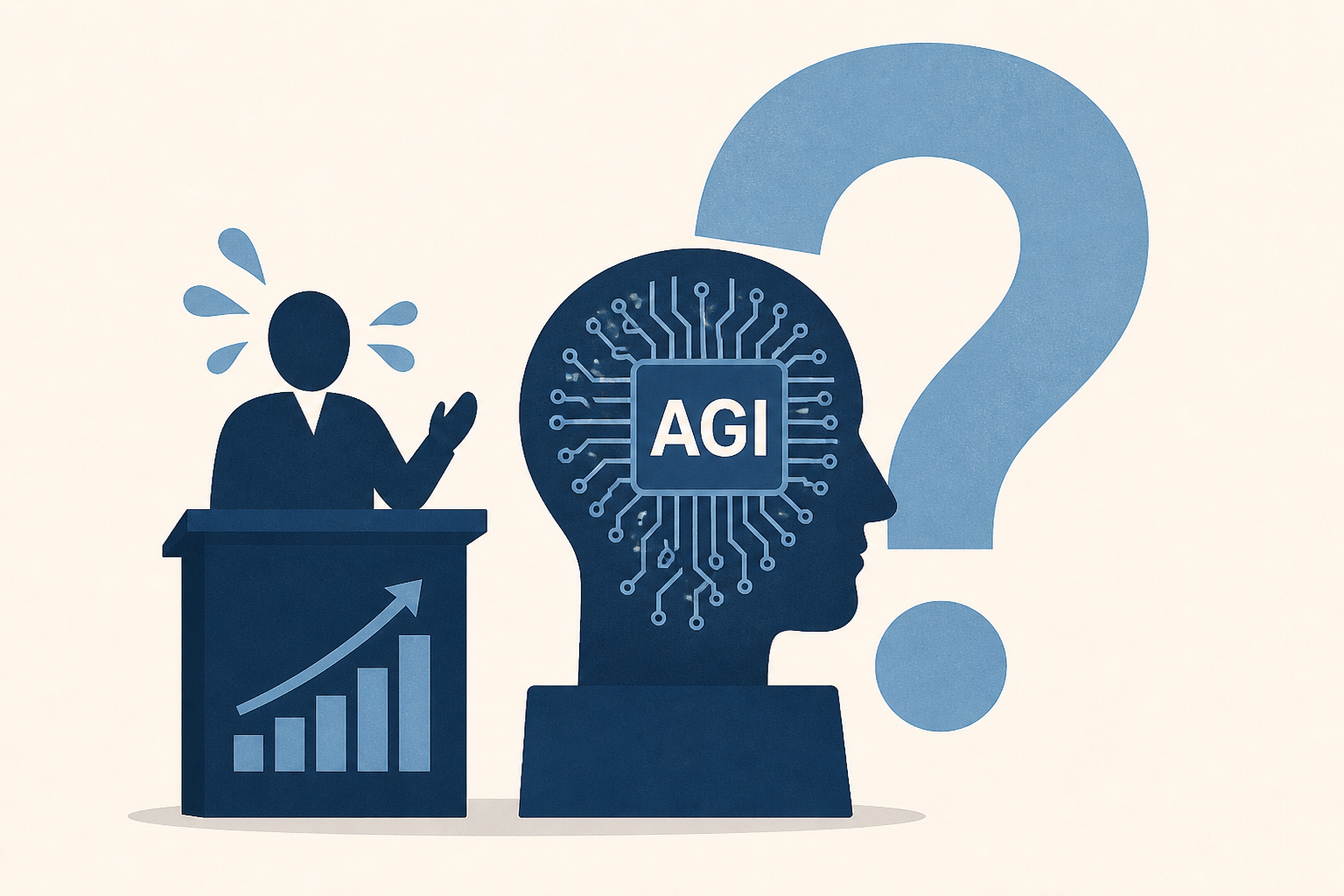
CEOs Keep Crying AGI. What Does That Even Mean?
Business Insider • • business
Key Points:
- OpenAI president Greg Brockman and several tech CEOs, including Elon Musk and Nvidia's Jensen Huang, have recently declared that artificial general intelligence (AGI) has arrived, citing advancements like OpenAI's Astra model.
- AGI is broadly defined as an AI capable of performing a wide variety of tasks as well as or better than humans, but experts argue the term is vague, poorly defined, and often used as marketing hype rather than a meaningful technical milestone.
- Critics like early AGI pioneer Peter Voss and AI researchers highlight that current AI systems lack the flexibility and learning plasticity of humans, requiring massive engineering resources for tasks humans learn quickly, thus disputing claims that true AGI exists today.
- Some industry leaders, including Anthropic's Dario Amodei, view AGI as more of a marketing term fueled by financial pressures on AI companies preparing for large IPOs, while others caution that scaling current large language models alone will not achieve genuine AGI.
- Several experts believe achieving true AGI remains a distant goal due to fundamental limitations in current AI architectures, with some suggesting that a general-purpose thinking machine may be impossible to engineer with existing approaches.


