AI Image
DNA Shows Ice Age Europeans Roamed Far Across Continent
Newser • • science
Key Points:
- DNA evidence from a French site suggests Isturitz may have been a central gathering place for Gravettian populations, indicating large-scale social networks across Europe.
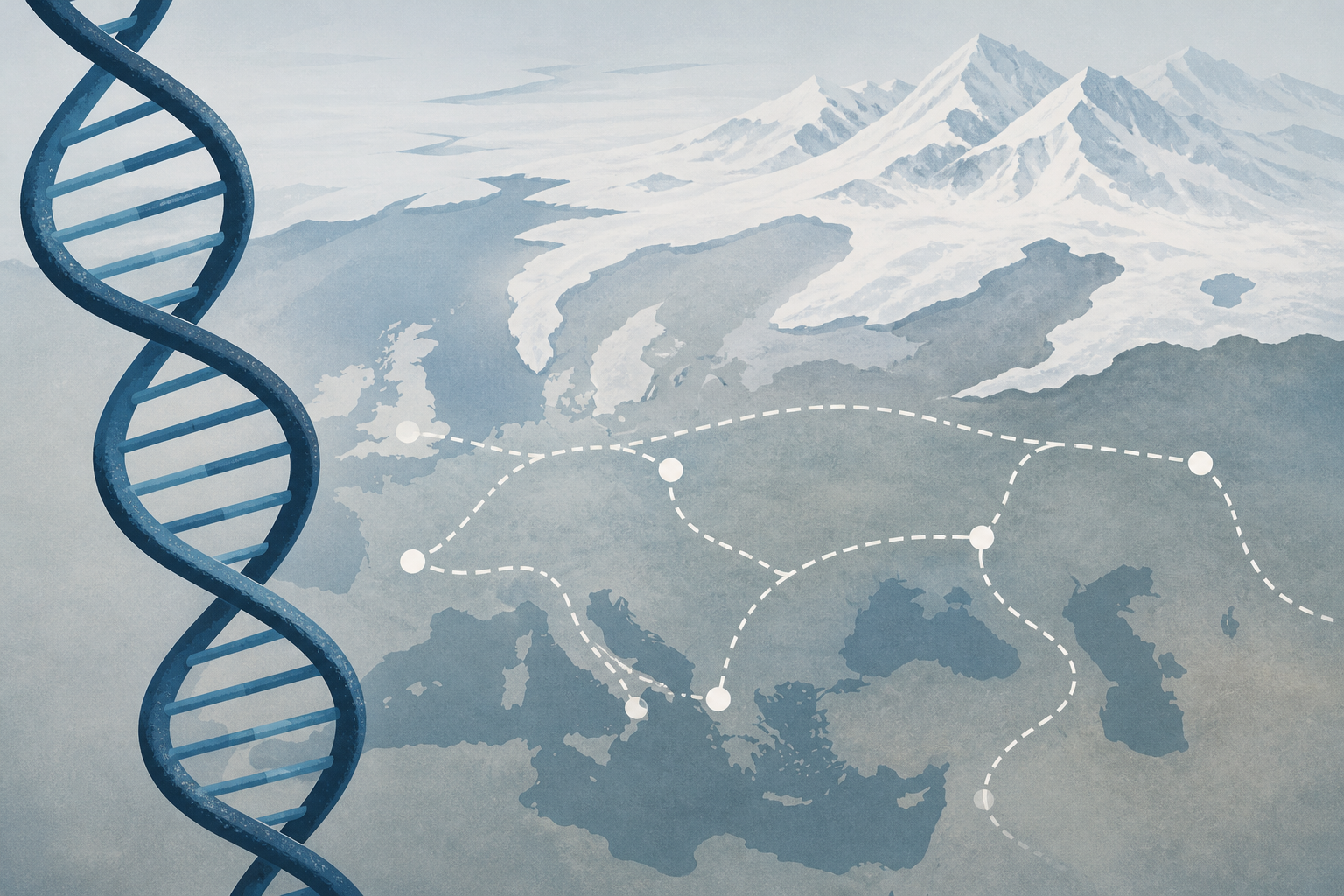
- Previous beliefs held that eastern and western Gravettian groups were genetically isolated, but new findings reveal gene flow across vast distances, reshaping understanding of their connectivity.
- Stable genetic lineages found in Spanish cave DNA support the idea of the Iberian Peninsula serving as a refuge during the coldest periods of the last Ice Age.
- Researchers utilized sedimentary DNA from cave sediments, even where no human remains were found, to recover genetic information and link archaeological layers to ancient populations.
- This approach offers a novel method to study human ancestry and occupation in periods lacking physical human fossils.


