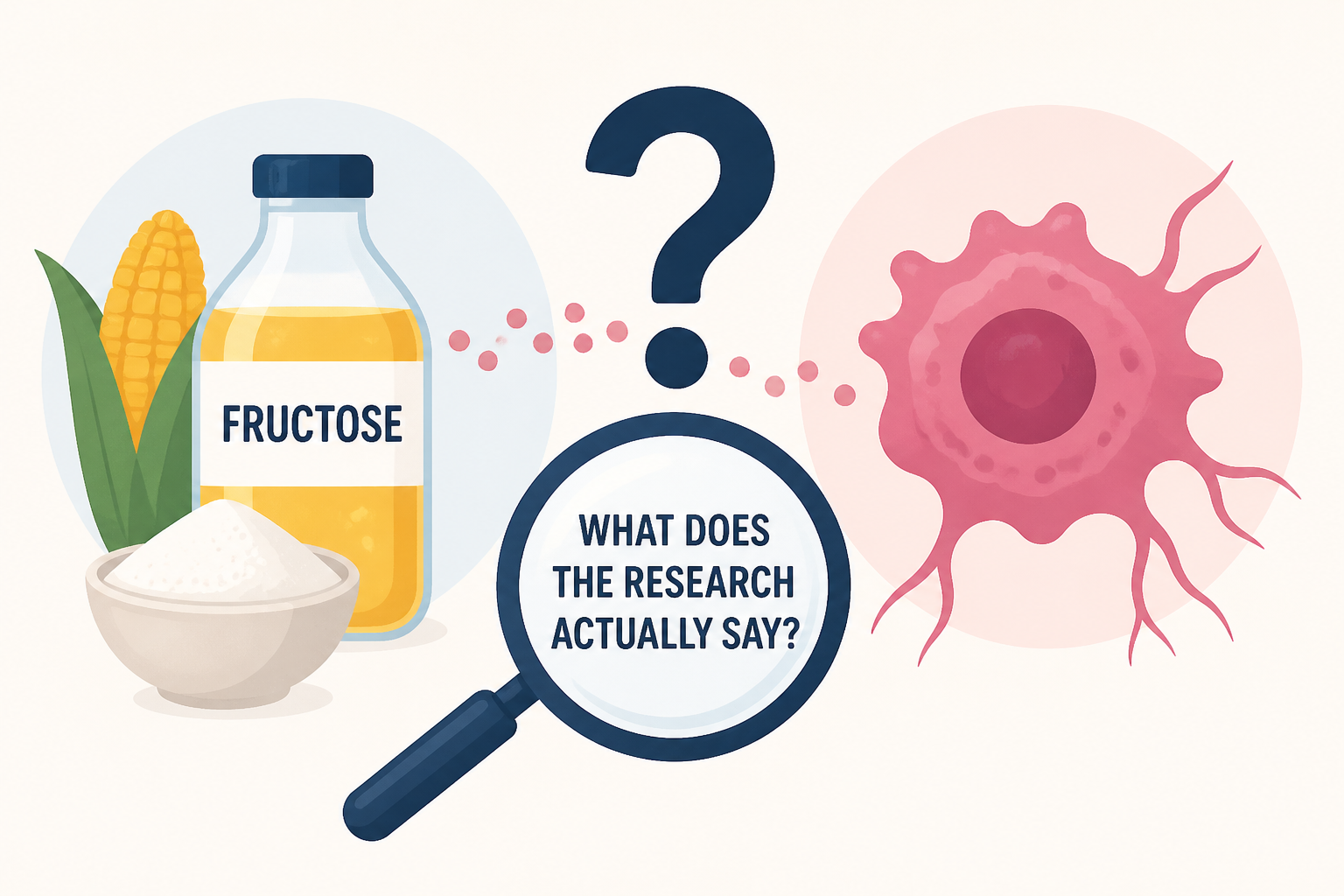
AI Generated Image
Does Fructose ‘Feed’ Cancer? Here’s What the Research Actually Says
AOL.com • • health
Key Points:
- Preclinical research indicates that fructose may contribute to cancer progression by altering the tumor environment and liver metabolism, potentially helping cancer cells spread, particularly in ovarian cancer models.
- Chemotherapy-damaged cancer cells produce fructose, which reduces cholesterol on their surface, weakening cell adhesion and enabling cancer cells to break away and metastasize.
- Dietary fructose, especially from added sugars like high-fructose corn syrup in processed foods and sugary beverages, may promote tumor growth by being converted into fats that tumors utilize.
- Experts emphasize that naturally occurring fructose in fruits and vegetables remains part of a healthy diet, and current evidence does not support eliminating all fructose, but recommend limiting intake of added sugars to reduce cancer risk.
- The findings highlight the complex role of nutrients in cancer biology and reinforce existing dietary guidelines to minimize consumption of sugar-sweetened beverages and highly processed foods with added sugars.


