AI Generated Image
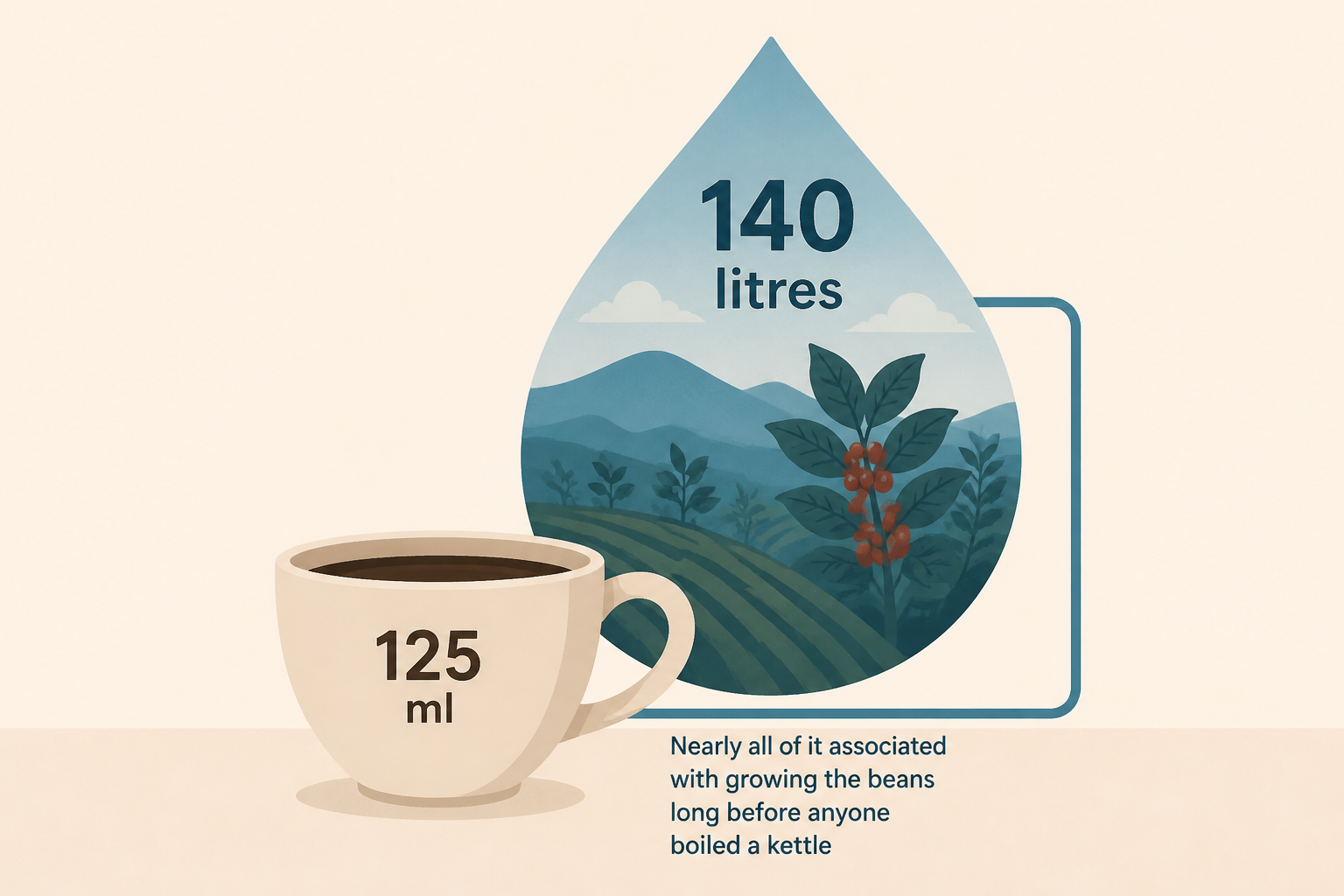
The water in your cup of coffee is about 125 millilitres, but the water behind it is closer to 140 litres - nearly all of it associated with growing the beans long before anyone boiled a kettle
Space Daily • • health
Key Points:
- A standard cup of coffee (125-240 ml) requires about 140 liters of water to produce, according to studies by Chapagain and Hoekstra, with most of this water used in growing the coffee plant rather than brewing or processing.
- Over 99% of coffee's water footprint comes from the agricultural stage, primarily rainwater absorbed by coffee plants, while water used in processing and brewing accounts for less than 1%.
- The 140-liter figure combines different types of water—green (rainwater), blue (surface and groundwater), and gray (polluted water)—which critics argue should be distinguished as they have different environmental impacts.
- The environmental significance of coffee’s water use depends heavily on the local context of where the coffee is grown, including factors like water availability, rainfall, and pollution, which a single global average figure cannot capture.
- Rather than discouraging coffee consumption, the water footprint highlights the importance of sustainable water management in coffee-growing regions and directs attention to the broader environmental conditions affecting production.


