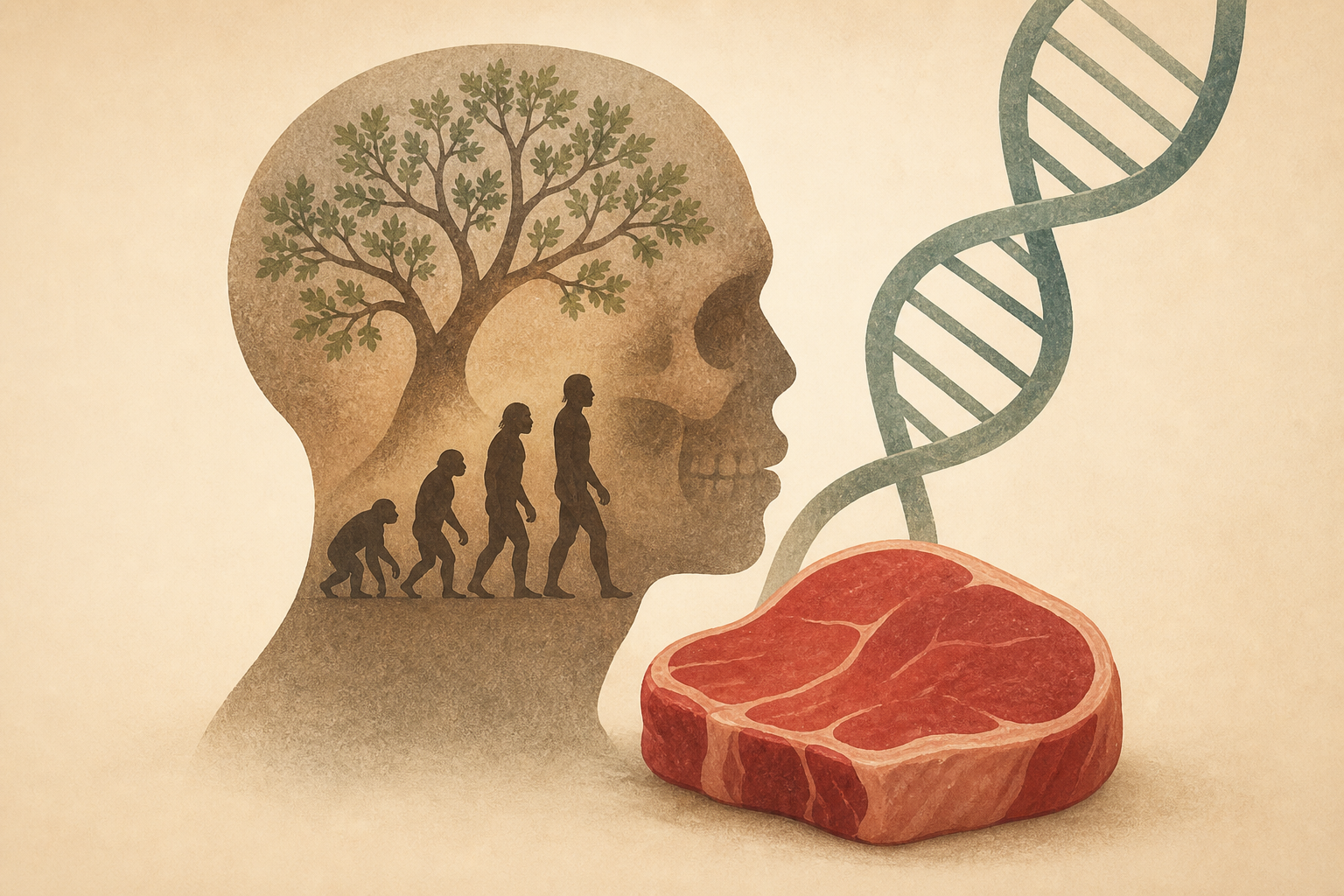
AI Generated Image
Eating meat contributed to ancestral growth spurt: study
New York Post • • science
Key Points:
- UK researchers found that human ancestors experienced a rapid body size increase between 2 and 2.5 million years ago, likely linked to increased meat consumption and more efficient bipedalism.
- Analyzing 386 hominin specimens across 21 species, the study showed a steady size increase in early ancestors like Australopithecus, followed by a significant 50-pound jump with the emergence of Homo erectus and Homo ergaster.
- This larger body size improved bipedal movement efficiency, enabling longer travel distances, better hunting, and predator defense, marking key ecological and behavioral evolutionary milestones.
- The research highlights that not all hominin species followed this growth pattern, with some, like Homo floresiensis, maintaining smaller, child-like statures, indicating diverse evolutionary paths within the human lineage.
- The study resolves previous conflicting theories by combining multiple methods and fossil data, revealing that body size evolution involved both gradual increases and rapid spurts rather than a constant growth trend.


![Apple Store is down: 'We’re making updates,' Apple says [Update: Back online]](https://media-cdn.cashwalklabs.io/https%3A%2F%2Fs3.us-west-2.amazonaws.com%2Fimages.cashwalklabs.io%2F0_admin%2Fnews-ai-images%2F019eff50-b84d-74e8-b323-fd285ceebf72.webp?format=webp&w=120&h=80)


