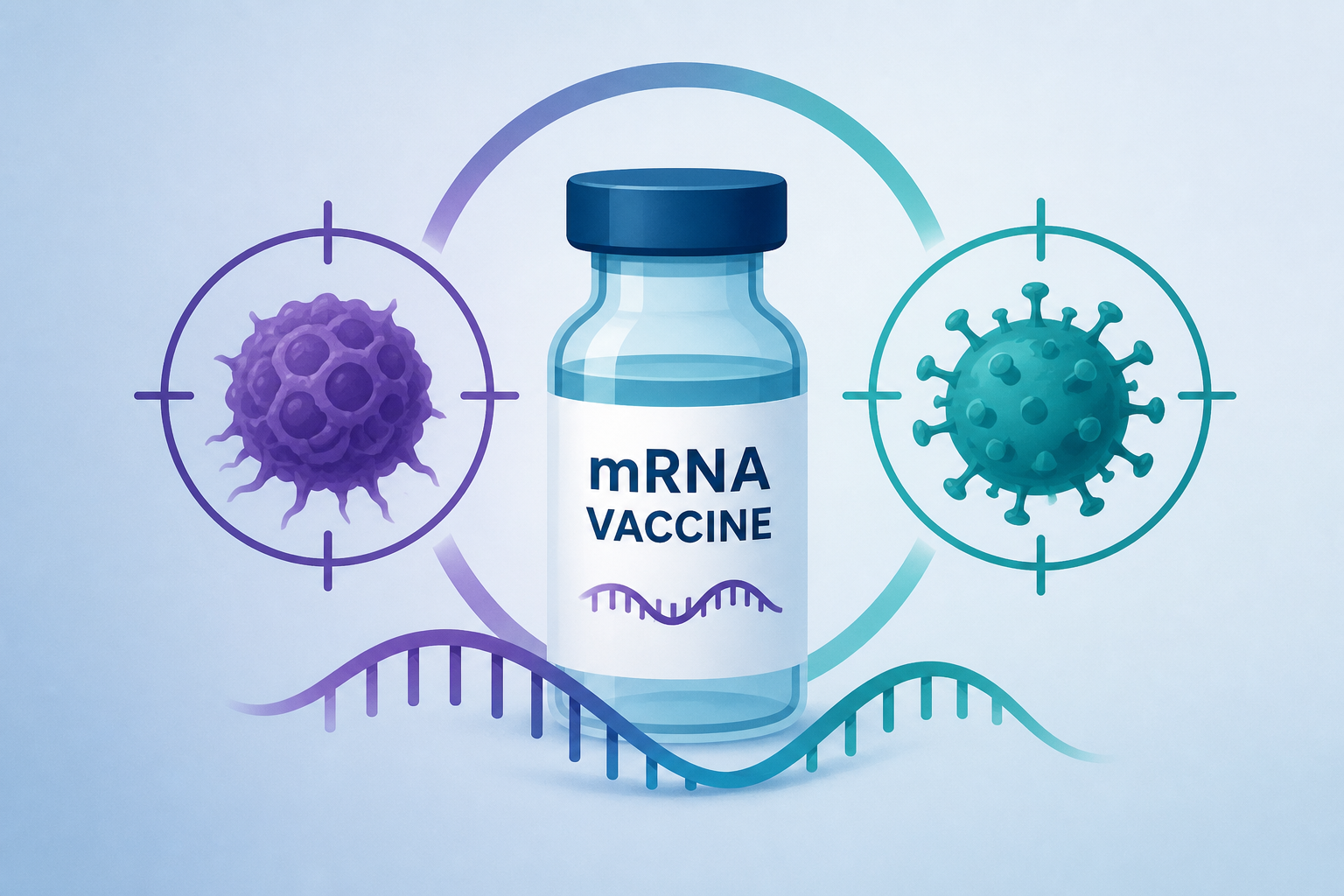
AI Generated Image
Emerging mRNA vaccine strategies target cancer and pathogenic viruses in potent new ways
Medical Xpress • • health
Key Points:
- Researchers at the University of Pennsylvania have developed two innovative mRNA-based methods to reprogram cytotoxic CD8 T cells (Teff cells) inside the body, aiming to enhance immune responses against viruses and cancer without removing cells for lab manipulation.
- One approach uses an mRNA-lipid nanoparticle complex targeting Teff cells via the fractalkine receptor CX3CR1, achieving up to 95% targeting efficiency in mice and demonstrating potential for precise in vivo T cell reprogramming.
- Another method involves an mRNA vaccine encoding interleukin-12 (IL-12) that boosts CD8 T-cell responses, enhancing immunity against SARS-CoV-2, influenza, and bacterial infections, offering a strategy for longer-lasting protection compared to traditional mRNA vaccines.
- These advancements suggest mRNA technology can be adapted beyond COVID-19 vaccines to create high-precision immunotherapies that selectively boost cytotoxic T cells, potentially transforming treatments for infectious diseases and cancer.


