AI Generated Image
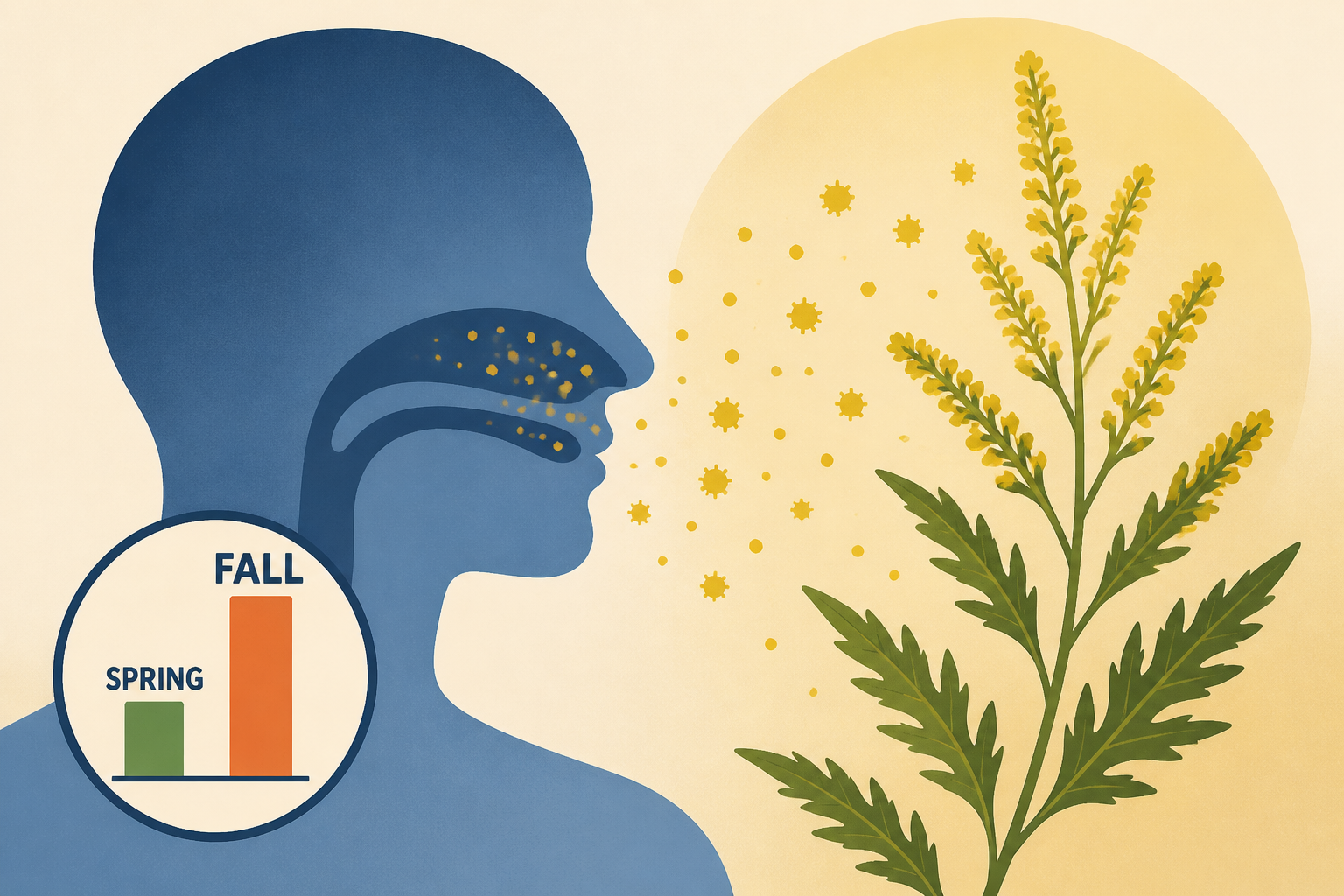
Fall allergies worse than spring? Ragweed pollen is to blame
The Weather Channel • • health
Key Points:
- Fall allergy season is primarily driven by ragweed pollen, which starts in August and peaks in mid-September, especially under dry, breezy conditions that help pollen spread and linger in the air.
- Ragweed is widespread across the U.S. and Canada, particularly in the Midwest and East, producing up to 1 billion pollen grains per plant that can travel as far as 400 miles, making it difficult to avoid exposure.
- Nearly 50 million Americans suffer from ragweed allergies, experiencing symptoms like cough, runny nose, itchy throat, nasal congestion, sneezing, and eye irritation; it can also trigger severe asthma attacks and cause skin rashes with direct contact.
- To manage symptoms, people are advised to monitor daily pollen counts and weather conditions, avoid outdoor activities during peak pollen times (morning to late afternoon), keep windows closed, use air conditioning, and shower promptly after being outside.
- Ragweed season ends abruptly with the first frost, providing relief, but until then, staying informed about pollen forecasts is key to minimizing allergy impacts.


