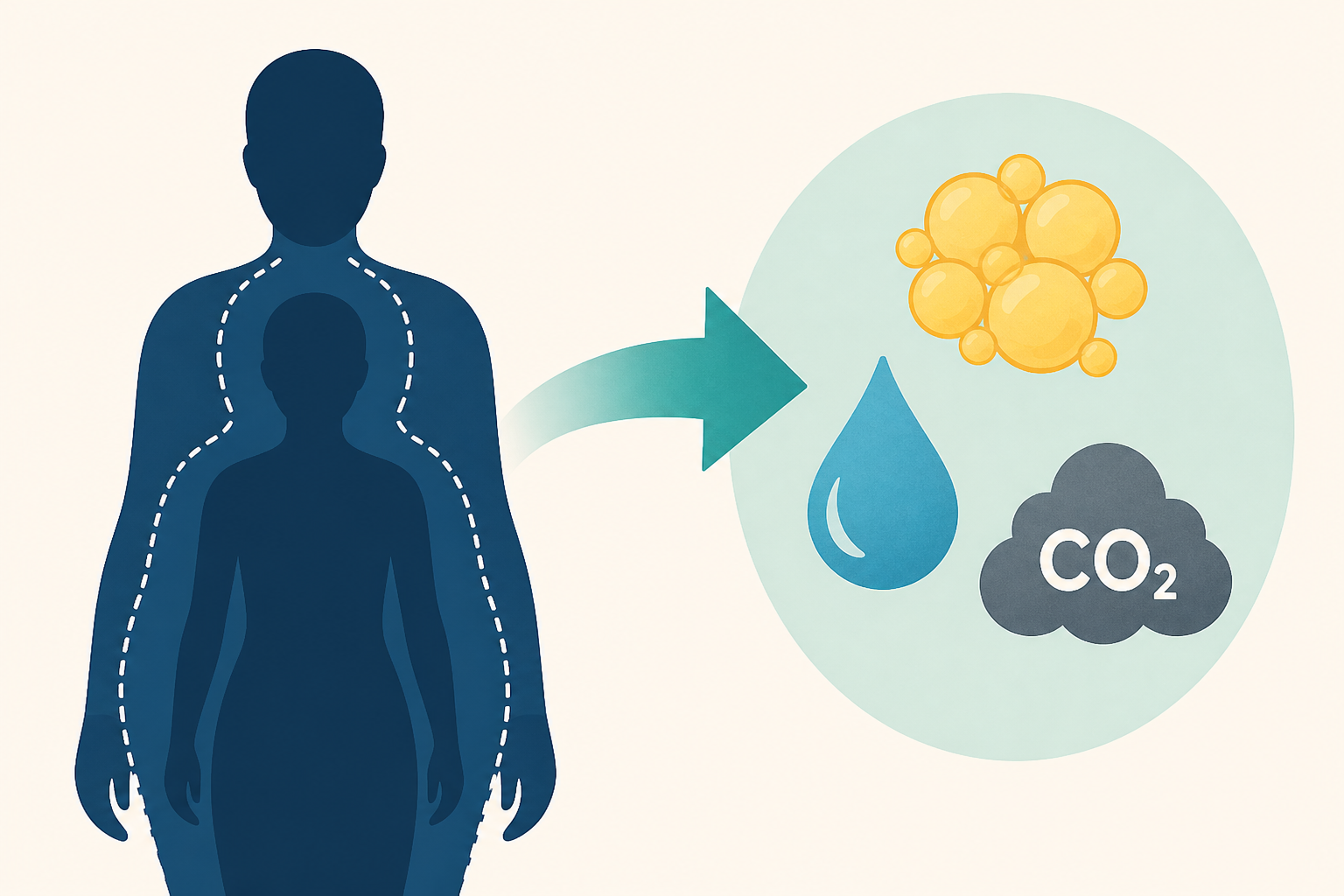
AI Generated Image
You'll Never Believe Where Weight Goes When You Lose It
HuffPost • • health
Key Points:
- Weight loss occurs when the body uses more calories than consumed, tapping into stored energy reserves like glycogen and body fat, which are broken down through metabolism.
- Approximately 84% of fat lost is converted into carbon dioxide and exhaled through the lungs, while about 16% is converted into water and eliminated via sweat and urine.
- Contrary to common myths, fat does not turn into muscle, leave the body as urine directly, or disappear as the scale number decreases; the primary route of fat loss is respiration.
- Understanding the science of weight loss can help individuals focus on sustainable habits such as healthy eating, physical activity, sleep, and stress management rather than quick fixes or gimmicks.
- The lungs play a crucial role in fat loss, highlighting the importance of metabolism in the weight loss process, with sweat and urine serving as secondary routes for eliminating water produced during fat metabolism.


