AI Generated Image
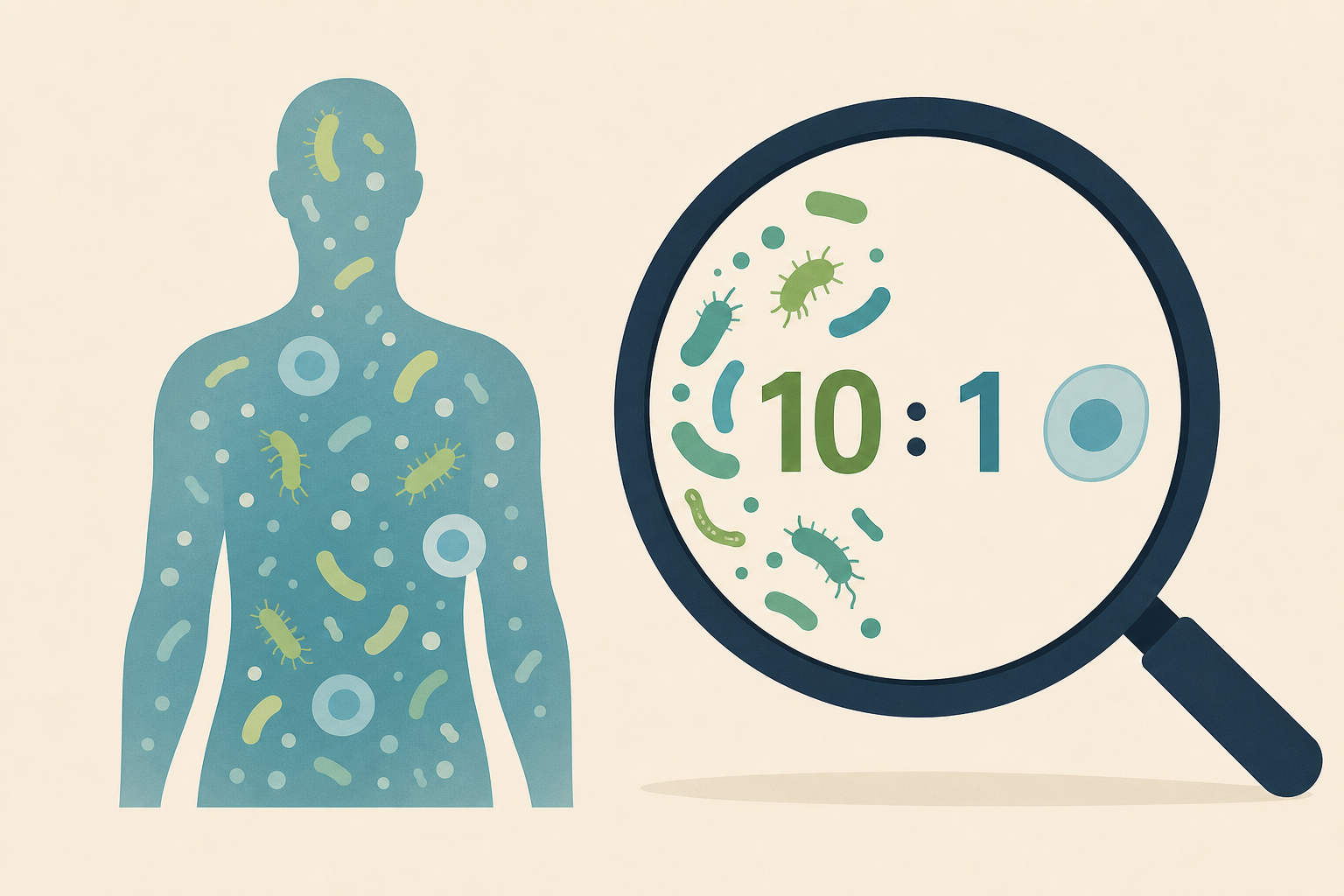
For decades, scientists repeated as established fact that bacteria in the human body outnumber human cells ten to one — a 2016 study by the Weizmann Institute of Science reviewed the original source a
Space Daily • • health
Key Points:
- The widely cited claim that human bodies contain ten times more bacterial cells than human cells originated from a rough 1972 estimate by Thomas Luckey, which was later popularized without sufficient scrutiny.
- In 2016, researchers Ron Sender, Shai Fuchs, and Ron Milo revisited this estimate using updated data and found the ratio to be closer to 1.3 bacterial cells for every human cell, significantly lower than the original ten-to-one figure.
- The bacterial-to-human cell ratio is not fixed and fluctuates due to factors like bowel movements, body size, diet, and health, with total bacterial cells estimated around 30 to 50 trillion, weighing roughly 200 grams.
- The persistence of the ten-to-one ratio was due to its memorability and alignment with the emerging scientific interest in the microbiome, as well as its use as contextual background rather than a scrutinized scientific claim.
- The correction does not diminish the biological importance of the microbiome but highlights the need for careful verification of commonly cited scientific figures, demonstrating the self-correcting nature of science.


![Apple Store is down: 'We’re making updates,' Apple says [Update: Back online]](https://media-cdn.cashwalklabs.io/https%3A%2F%2Fs3.us-west-2.amazonaws.com%2Fimages.cashwalklabs.io%2F0_admin%2Fnews-ai-images%2F019eff50-b84d-74e8-b323-fd285ceebf72.webp?format=webp&w=120&h=80)


