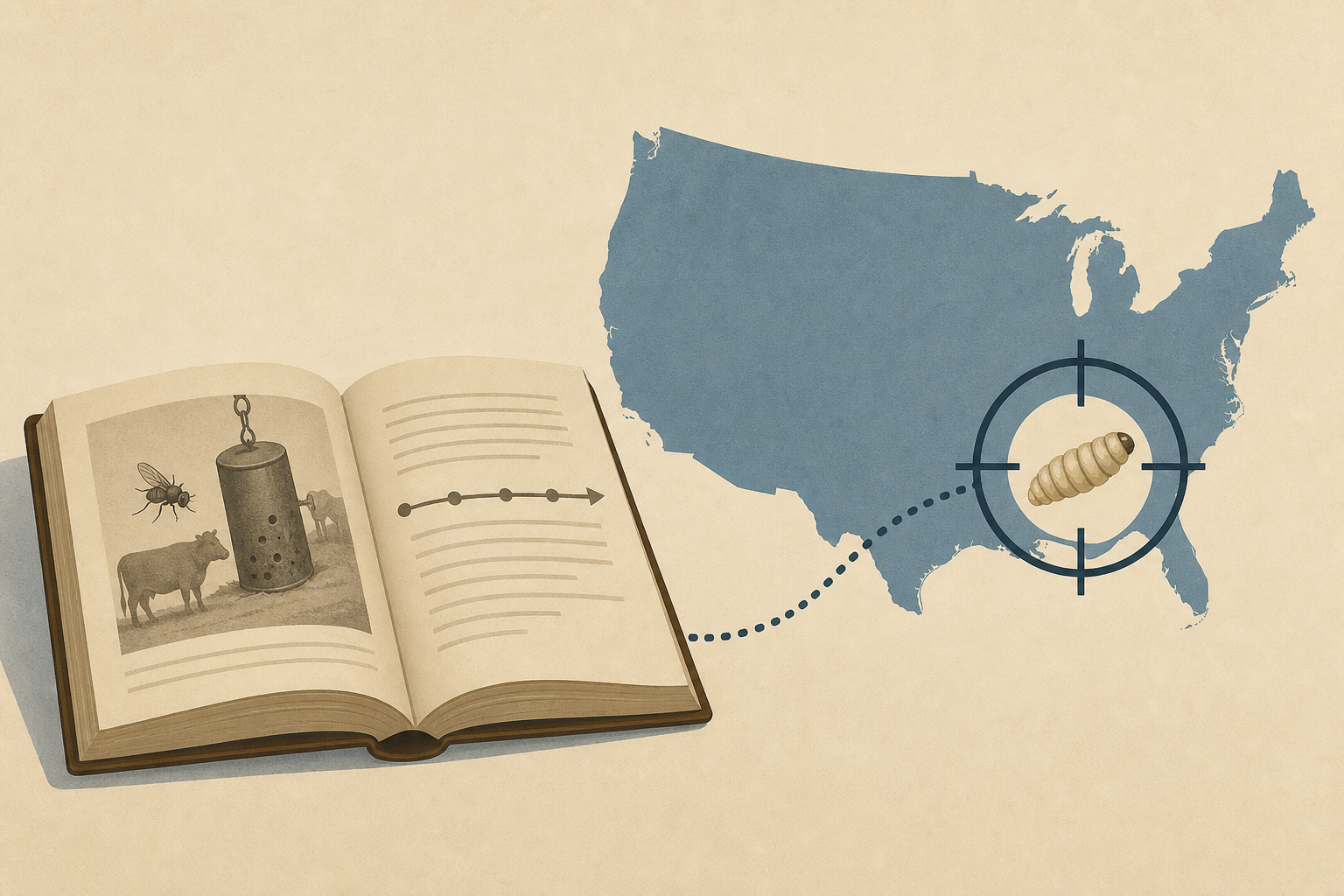
AI Generated Image
How history is guiding a U.S. attempt to beat screwworm again
The Texas Tribune • • nation
Key Points:
- The New World screwworm has re-entered the U.S., raising concerns due to its history of causing devastating livestock losses and economic damage, with previous eradication efforts saving the industry over $900 million annually.
- The screwworm was initially eradicated through the Sterile Insect Technique, developed by scientists Edward F. Knipling and Raymond Bushland, which involved releasing sterilized flies to prevent reproduction and spread.
- Despite successful eradication by 1982, outbreaks recurred due to factors like lax quarantine and environmental conditions, leading to significant economic losses, including nearly $330 million in Texas in 1976 (equivalent to $1.8 billion today).
- A joint U.S.-Mexico Screwworm Eradication Commission was established in the late 1970s to coordinate efforts, resulting in northern Mexico being declared screwworm-free by 1980 and the U.S. reporting its last case in 1982 until the recent resurgence.
- Experts emphasize that large-scale, preventative measures are essential for controlling screwworm outbreaks, as farm-by-farm control efforts have proven ineffective historically.


![Apple Store is down: 'We’re making updates,' Apple says [Update: Back online]](https://media-cdn.cashwalklabs.io/https%3A%2F%2Fs3.us-west-2.amazonaws.com%2Fimages.cashwalklabs.io%2F0_admin%2Fnews-ai-images%2F019eff50-b84d-74e8-b323-fd285ceebf72.webp?format=webp&w=120&h=80)


