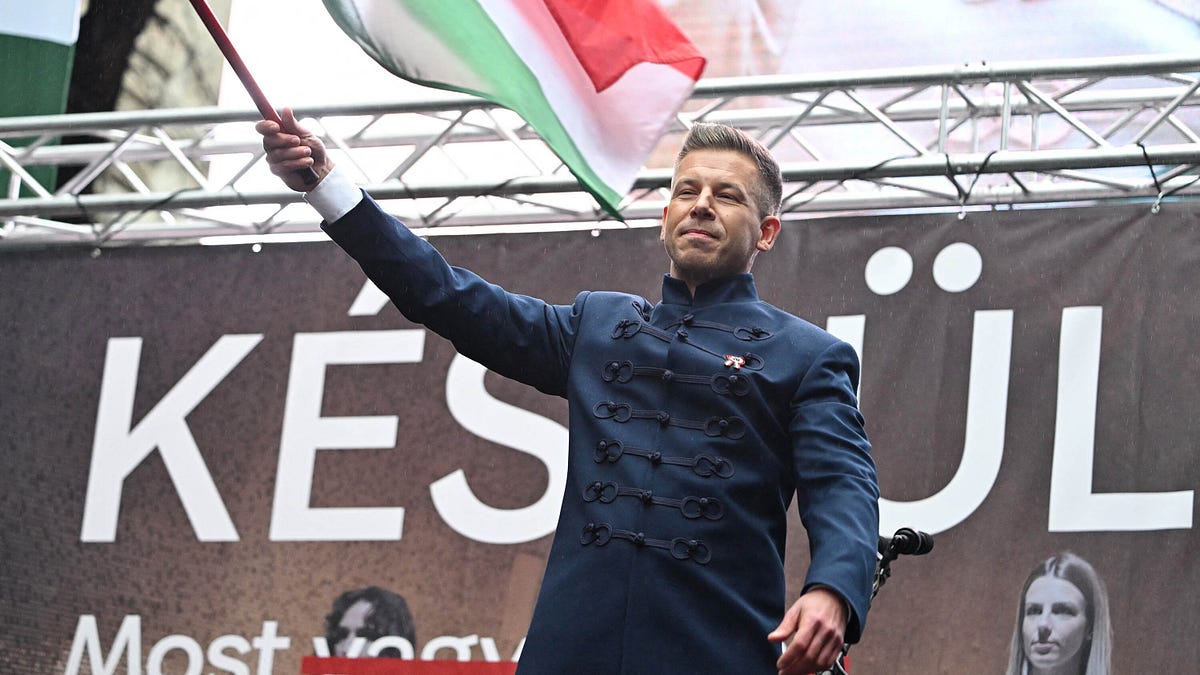
How Péter Magyar Toppled Viktor Orbán’s Illiberal Regime
The Bulwark • • world
Key Points:
- The defeat of Viktor Orbán in Hungary's 2026 elections marks a historic "system change," ending a period of competitive authoritarianism and signaling a dramatic political shift akin to the end of apartheid or European communism.
- Péter Magyar emerged as a pivotal figure by uniting fragmented opposition parties into a single force, leveraging his insider knowledge and a grassroots campaign that connected deeply with Hungarians, invoking the liberal ideals of the 1848 revolution.
- Magyar's campaign emphasized Hungary's suppressed liberal traditions rooted in the 19th-century national awakening, contrasting sharply with Orbán's reactionary, anti-liberal nationalism tied to post-World War I trauma and anti-communist sentiment.
- The election represented a generational and ideological shift, with younger voters rejecting Orbán's illiberal Christian conservative nationalism in favor of a revived national liberalism inspired by Hungary's historical commitment to constitutional government and individual freedoms.
- Orbán's fall exposes the fragility and ideological emptiness of Christian conservative nationalism, offering Hungary a chance for profound societal reform and positioning it as a potential model for a liberal democratic future distinct from authoritarian alternatives.


