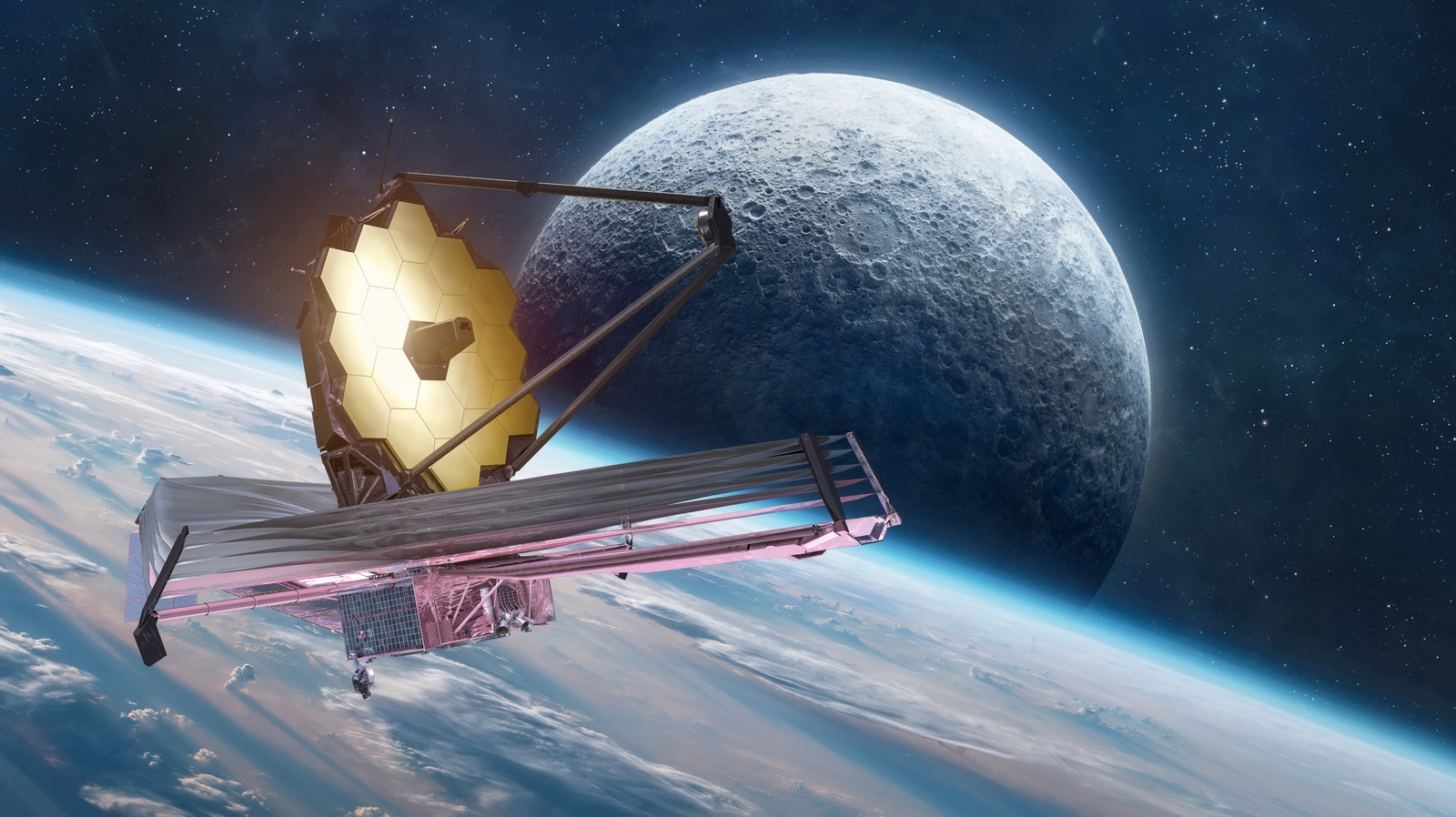
James Webb Space Telescope Brings Details Of Nearby 'Super-Earth' Into Focus
Jalopnik • • science
Key Points:
- The James Webb Space Telescope (JWST) has advanced the study of rocky exoplanets by enabling direct characterization of their surfaces using mid-infrared spectroscopy, revealing not just chemical compositions but also terrain features.
- JWST's first detailed study focused on the super-Earth LHS 3844 b, about 30% larger than Earth, tidally locked to its red dwarf star, and completing an orbit in just 11 hours, with a surface temperature of 1,340°F on its dayside.
- Spectroscopic data from JWST’s Mid-Infrared Instrument (MIRI) showed LHS 3844 b has a dark, olivine-rich surface similar to Earth's mantle but lacks signs of volcanic gases like CO2 and SO2, suggesting an old, geologically inactive, and powdery surface.
- The planet appears barren, without atmosphere, tectonic activity, or water, resembling a scorched, rocky world similar to Mercury, demonstrating JWST’s capability to provide detailed insights into distant exoplanets nearly 50 light-years away.
- Further JWST observations are planned to analyze infrared emission angles to mathematically reconstruct the planet’s terrain, highlighting the telescope’s role in deepening our understanding of exoplanetary surfaces.


