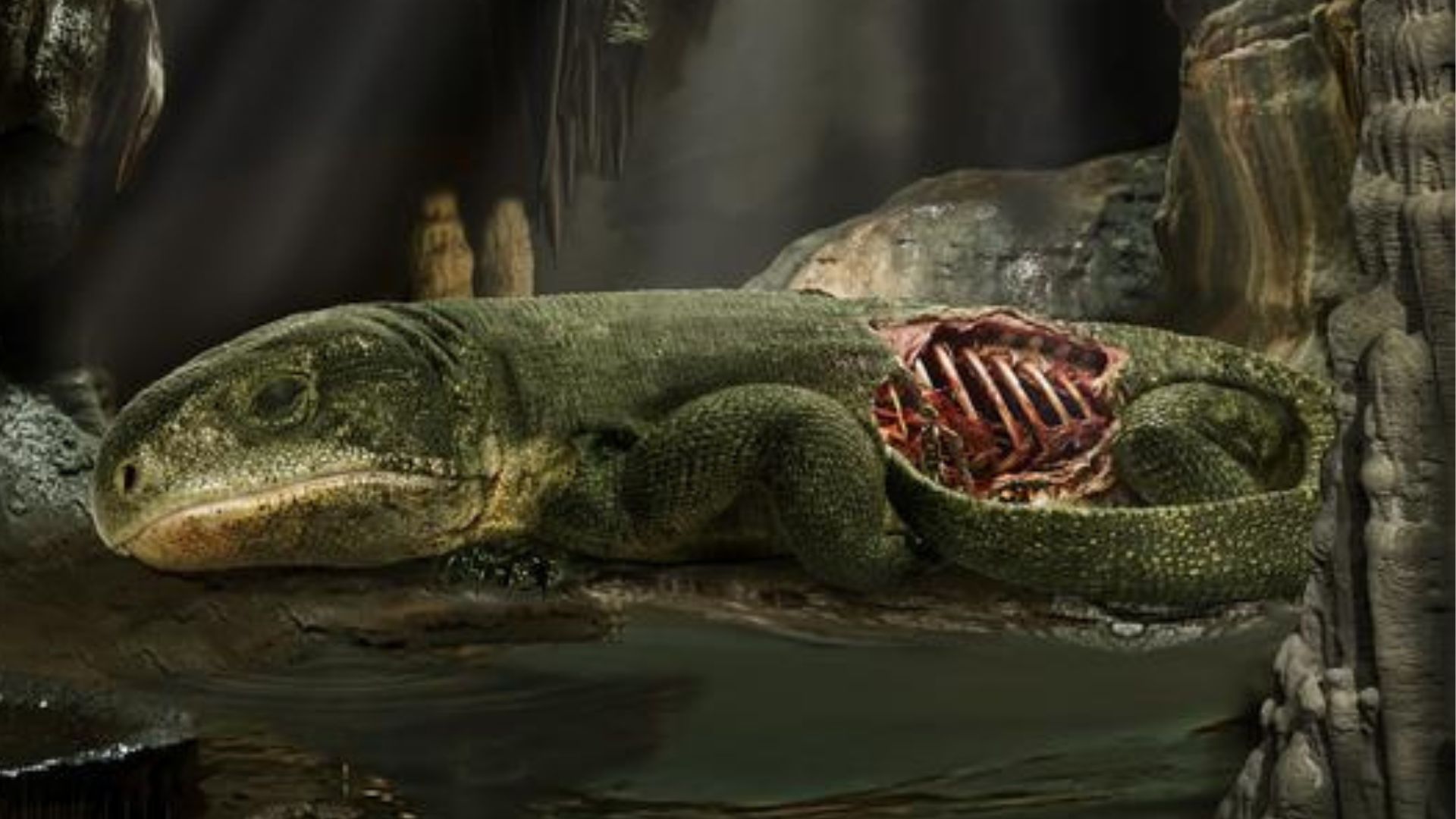
old mummy fossil shows earliest rib
Interesting Engineering • • science
Key Points:
- Paleontologists have discovered a remarkably preserved fossil of Captorhinus aguti, a small reptile from 289 million years ago, providing the oldest evidence of costal breathing in land animals.
- The fossil, mummified in three dimensions due to unique environmental conditions in an Oklahoma cave, preserved soft tissues like skin and cartilage, allowing detailed study of its respiratory system.
- Using neutron computed tomography, researchers reconstructed the first complete breathing apparatus of an early amniote, revealing a rib-powered respiration system that improved oxygen intake over amphibian ancestors.
- This rib-assisted breathing mechanism, known as costal aspiration, enabled early reptiles to be more active and thrive in terrestrial environments, representing the evolutionary foundation for respiration in modern reptiles, birds, and mammals.
- The study, published in Nature, highlights Captorhinus as a critical ancestor for land vertebrates, with specimens now housed at the Royal Ontario Museum for further scientific research.


