AI Image
Roman coin hoard uncovered in Germany could equal a soldier's life savings
Fox News • • world
Key Points:
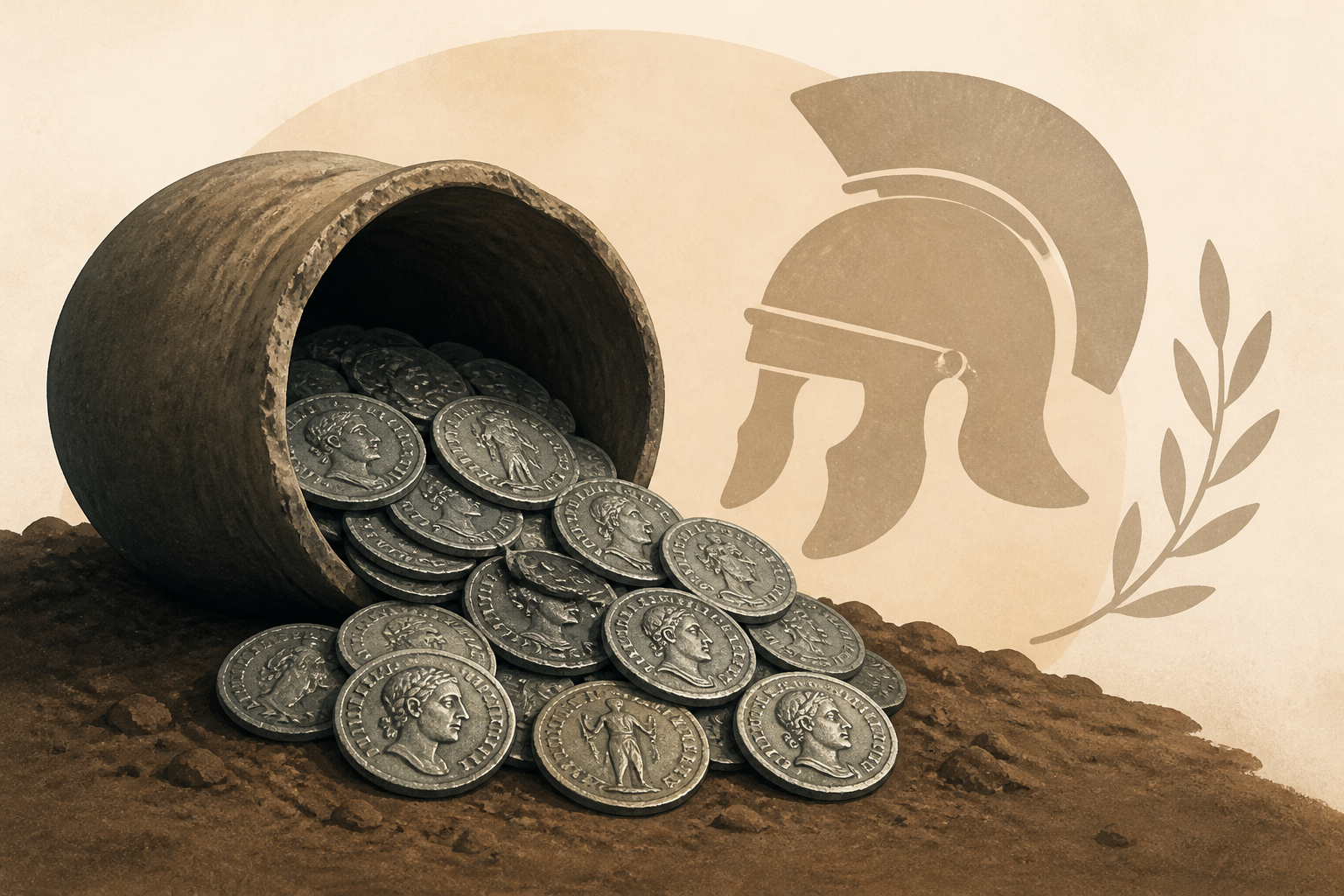
- A man named Oliver Riedl discovered a hoard of 934 ancient Roman silver coins near Wesseling, Germany, dating back nearly 2,000 years to the reign of Emperor Hadrian.
- The coins, weighing 6.8 pounds, are the largest Roman coin hoard from Hadrian’s era ever found in Germany and are now displayed at the LVR-LandesMuseum Bonn.
- Experts believe the hoard likely represented the life savings of one individual, possibly a Roman soldier, and was intentionally buried between 125 and 150 A.D. but never recovered by its owner.
- The discovery was made responsibly by a licensed metal detectorist who promptly alerted archaeological authorities, highlighting the importance of proper procedures in such finds.
- The hoard provides valuable insight into the everyday currency used along the Roman Empire’s Rhine frontier, near significant military sites like Cologne and Bonn.


