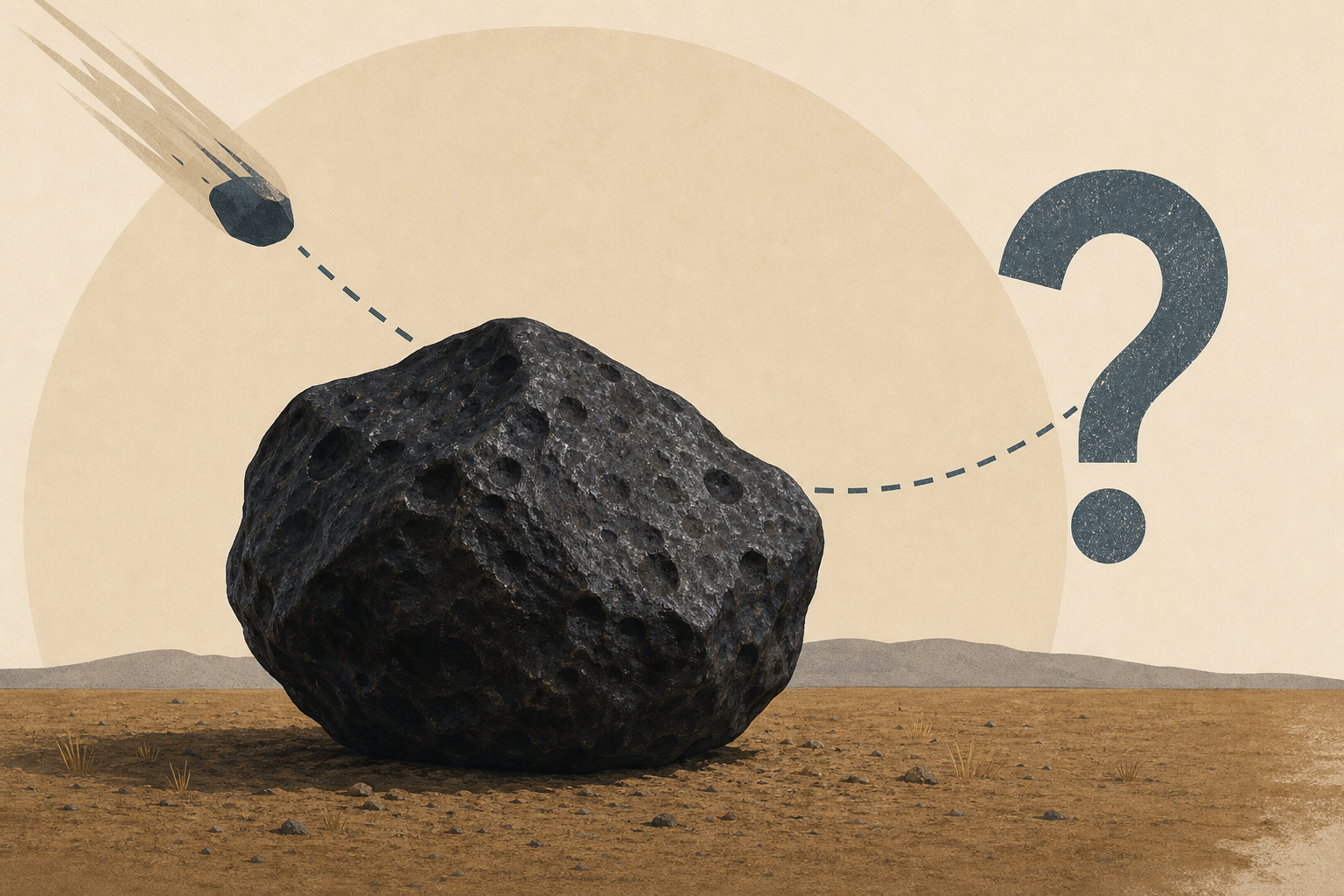
AI Generated Image
The Largest Intact Meteorite on Earth Is Still Exactly Where It Landed. But Why No Crater?
ZME Science • • science
Key Points:
- The Hoba meteorite in Namibia, weighing about 60 metric tons today, is the largest known natural iron piece on Earth and landed around 80,000 years ago without creating a visible crater.
- Its survival without catastrophic impact is attributed to its rare nickel-rich composition, slab-like shape, shallow atmospheric entry angle, and the braking effect of Earth's atmosphere.
- The meteorite's flat shape increased atmospheric drag, slowing it down significantly, while its high nickel content prevented it from breaking apart during entry.
- Geological processes, including sediment burial and calcrete formation, have likely erased any initial crater that formed upon impact.
- Human activity and natural weathering have reduced its mass from about 66 tons at discovery in 1920 to around 60 tons today, despite legal protections established since 1955.


