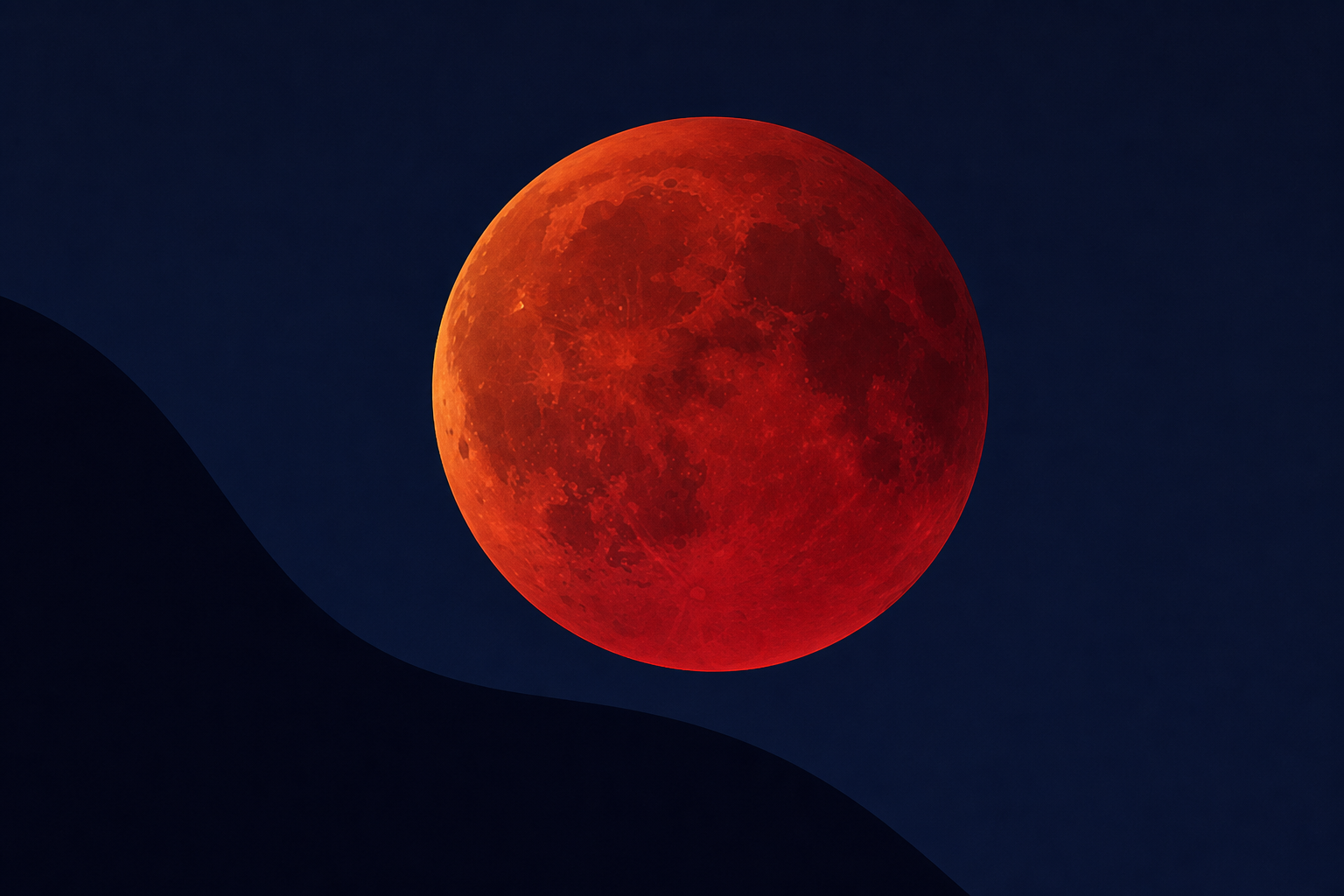
AI Generated Image
The moon turned a deep red overnight. See the near-total lunar eclipse in 17 breathtaking photos.
Yahoo • • general
Key Points:
- Skywatchers across much of the U.S. observed a near-total lunar eclipse overnight Thursday into Friday, with about 96% of the moon's surface obscured at its peak.
- The moon appeared dark red or copper due to sunlight filtering through Earth's atmosphere, but it did not fully enter the darkest part of Earth's shadow (the umbra), so it was not a total lunar eclipse.
- The partial eclipse phase lasted over three hours, with the entire event spanning about five and a half hours, and was visible across the Americas, parts of Europe, Africa, and the Middle East.
- This eclipse was the second lunar eclipse of 2026, following a total lunar eclipse in March and occurring shortly after a total solar eclipse visible in parts of the U.S., Greenland, Iceland, and Spain.
- The next total lunar eclipse will occur on New Year's Eve 2028, best seen from Asia and Australia, with the next total lunar eclipse visible in the Americas expected in 2029.


