AI Generated Image
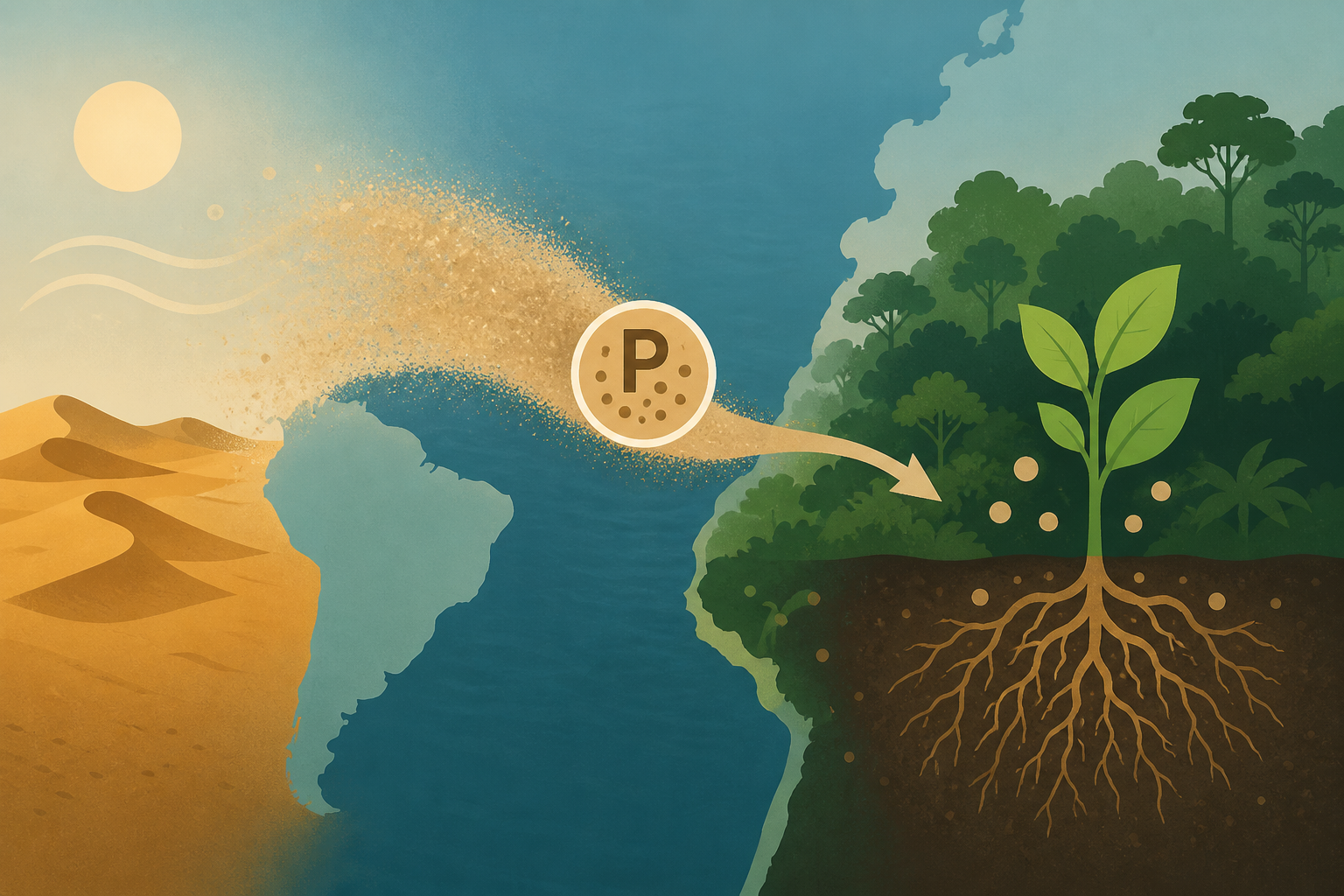
The Sahara sends roughly 27 million tonnes of dust across the Atlantic every year, and the phosphorus in it is what stops the Amazon's soils exhausting themselves, which means the largest rainforest o
Space Daily • • health
Key Points:
- NASA's CALIPSO satellite estimated that about 27.7 million tonnes of Saharan dust, containing roughly 22,000 tonnes of phosphorus, are deposited annually over the Amazon basin, potentially balancing phosphorus lost through rain and flooding.
- This dust transport varies greatly year-to-year, influenced by factors such as Sahel rainfall and vegetation, indicating that the 27.7 million tonnes figure is an average from 2007-2013 rather than a fixed annual amount.
- The Amazon's fertility relies heavily on internal nutrient recycling, but external inputs like Saharan dust provide essential phosphorus that compensates for nutrient losses from weathered soils and heavy rainfall.
- Subsequent studies suggest lower dust deposition estimates (8-10 million tonnes annually) and highlight additional phosphorus sources such as African biomass-burning aerosols and local Andean sediments, complicating the nutrient budget.
- The key insight is the atmospheric connection linking continents: Saharan dust transports vital nutrients across the Atlantic, influencing Amazonian ecosystems, with the flow sensitive to climate-driven changes in African environmental conditions.


