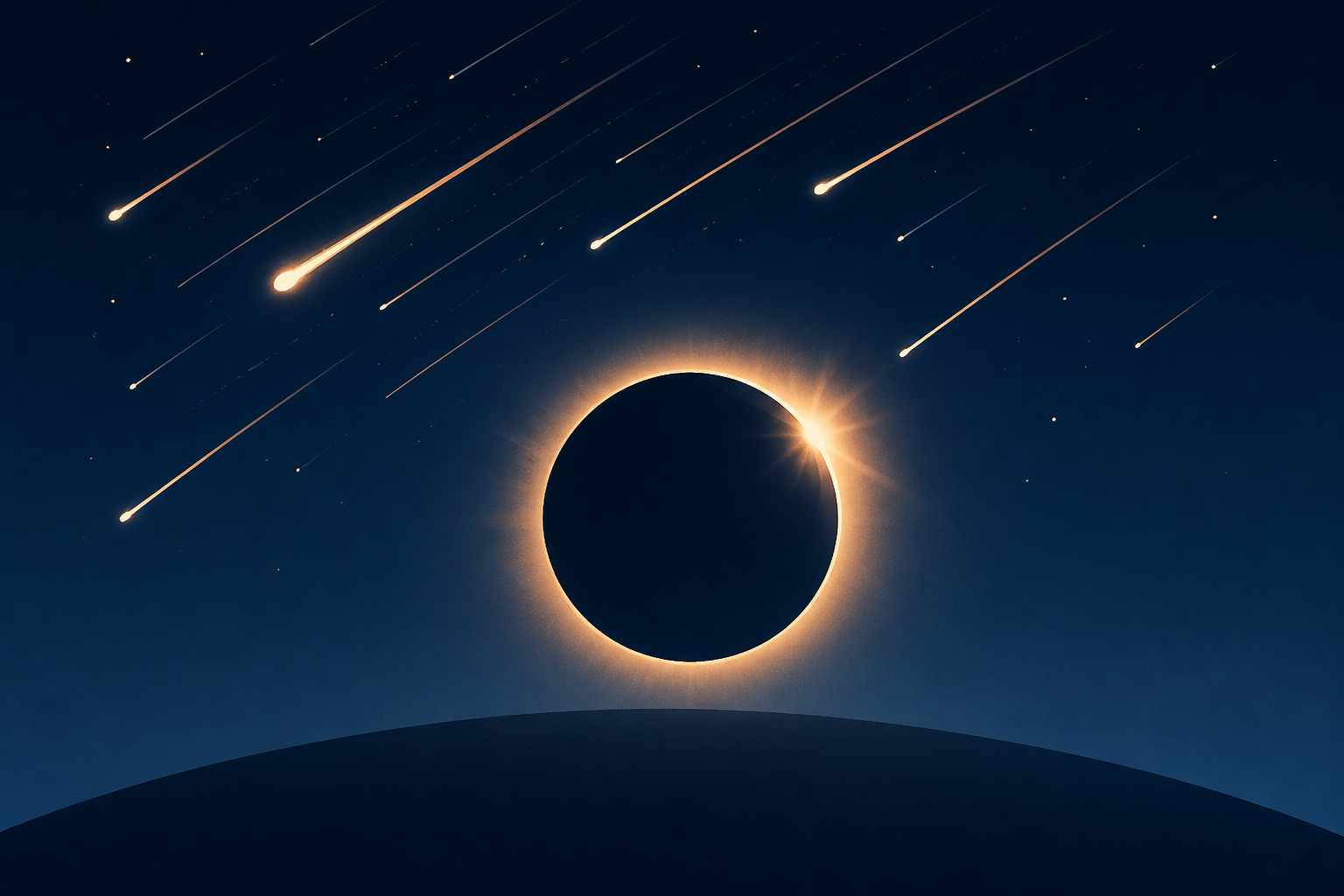
AI Generated Image
The stunning fireball Perseid meteor shower twinning with the solar eclipse
The Independent • • science
Key Points:
- The Perseid meteor shower will peak Wednesday night into Thursday morning, potentially displaying 30 to 100 meteors per hour under ideal dark-sky conditions, according to NASA and the American Meteor Society.
- This year's Perseids coincide with a total solar eclipse visible in parts of Europe, but the best meteor viewing will occur after the eclipse's totality phase.
- The Perseids originate from debris left by comet 109P/Swift-Tuttle, which orbits the sun every 133 years, and have been observed for over 2,000 years; their bright fireballs and summer timing make them a popular meteor shower.
- Viewing conditions are optimal this year due to the new moon phase, which eliminates moonlight interference, allowing for clearer visibility of meteors radiating from the constellation Perseus between midnight and dawn.
- To safely observe the solar eclipse on August 12, eclipse glasses are essential, with the eclipse visible across the UK from early evening until around 8:10 pm, varying by location and weather.


