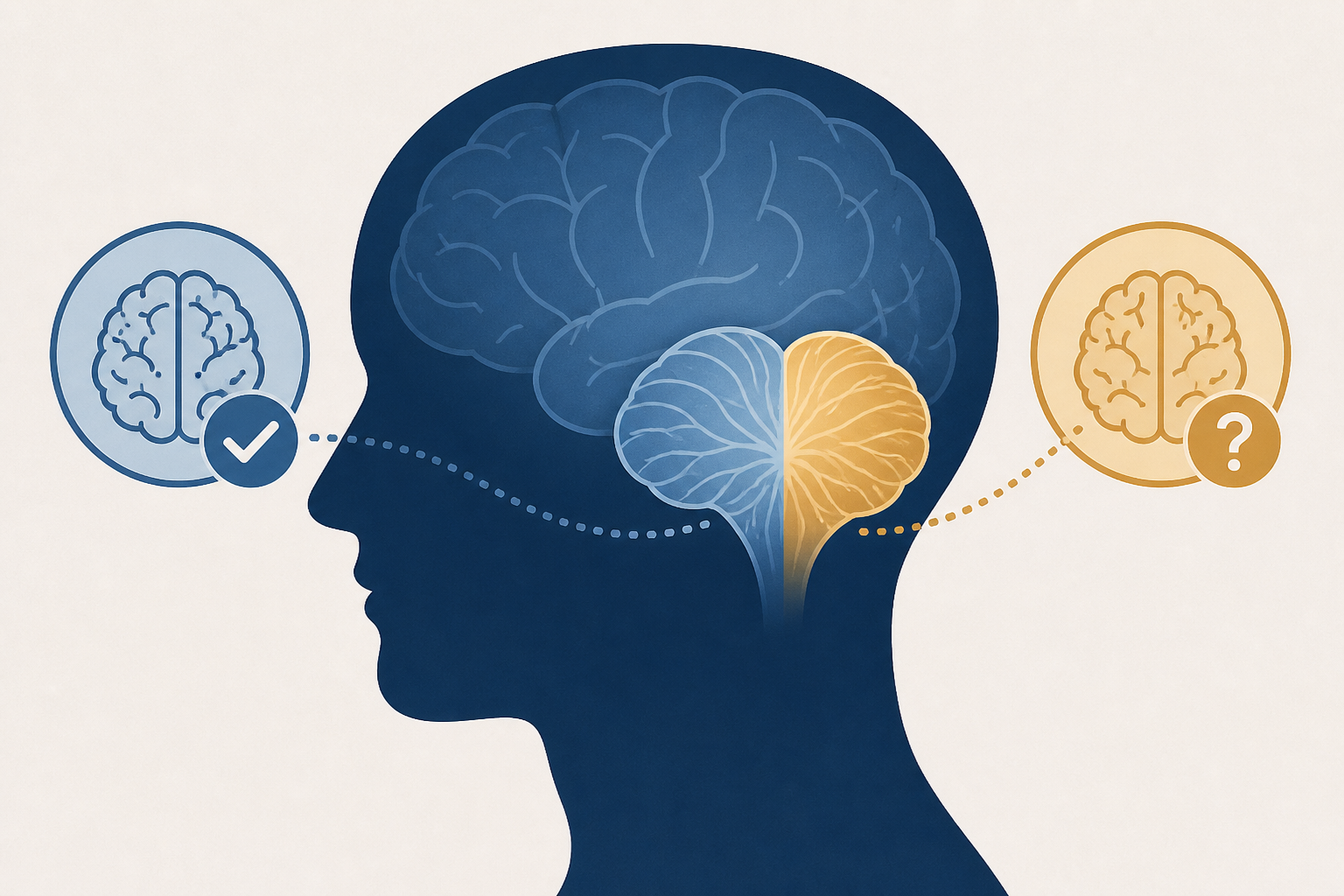
AI Generated Image
Uneven cerebellum aging may partly explain why some older adults stay mentally sharp
Medical Xpress • • health
Key Points:
- Scientists have found that different parts of the cerebellum age at different rates, which may influence cognitive abilities and memory retention in older adults.
- The cerebellum, despite being smaller than other brain regions, contains most neurons and is crucial for balance, posture, and fine motor skills.
- Research analyzing brain scans from over 700 individuals showed that regions connected to higher-order thinking shrink faster than those involved in basic movement, and larger cerebellum size correlates with better cognitive performance.
- Similar patterns were observed in larger datasets, but the cerebellum's protective role appears limited in Alzheimer's disease as pathology advances.
- The study establishes an association between cerebellum size and cognition but does not prove causation, and its findings may not be universally applicable due to demographic limitations.


![Apple Store is down: 'We’re making updates,' Apple says [Update: Back online]](https://media-cdn.cashwalklabs.io/https%3A%2F%2Fs3.us-west-2.amazonaws.com%2Fimages.cashwalklabs.io%2F0_admin%2Fnews-ai-images%2F019eff50-b84d-74e8-b323-fd285ceebf72.webp?format=webp&w=120&h=80)


