AI Image
Valley fever spreading to Central Valley cities, linked to oil drilling
Los Angeles Times • • health
Key Points:
- John Taylor, a UC Berkeley professor, warns that valley fever, a sometimes-fatal disease caused by the Coccidioides fungus, is increasing in the Central Valley and Southwest, advising outdoor laborers to wear full face masks with HEPA-filtered air supplies to prevent infection.
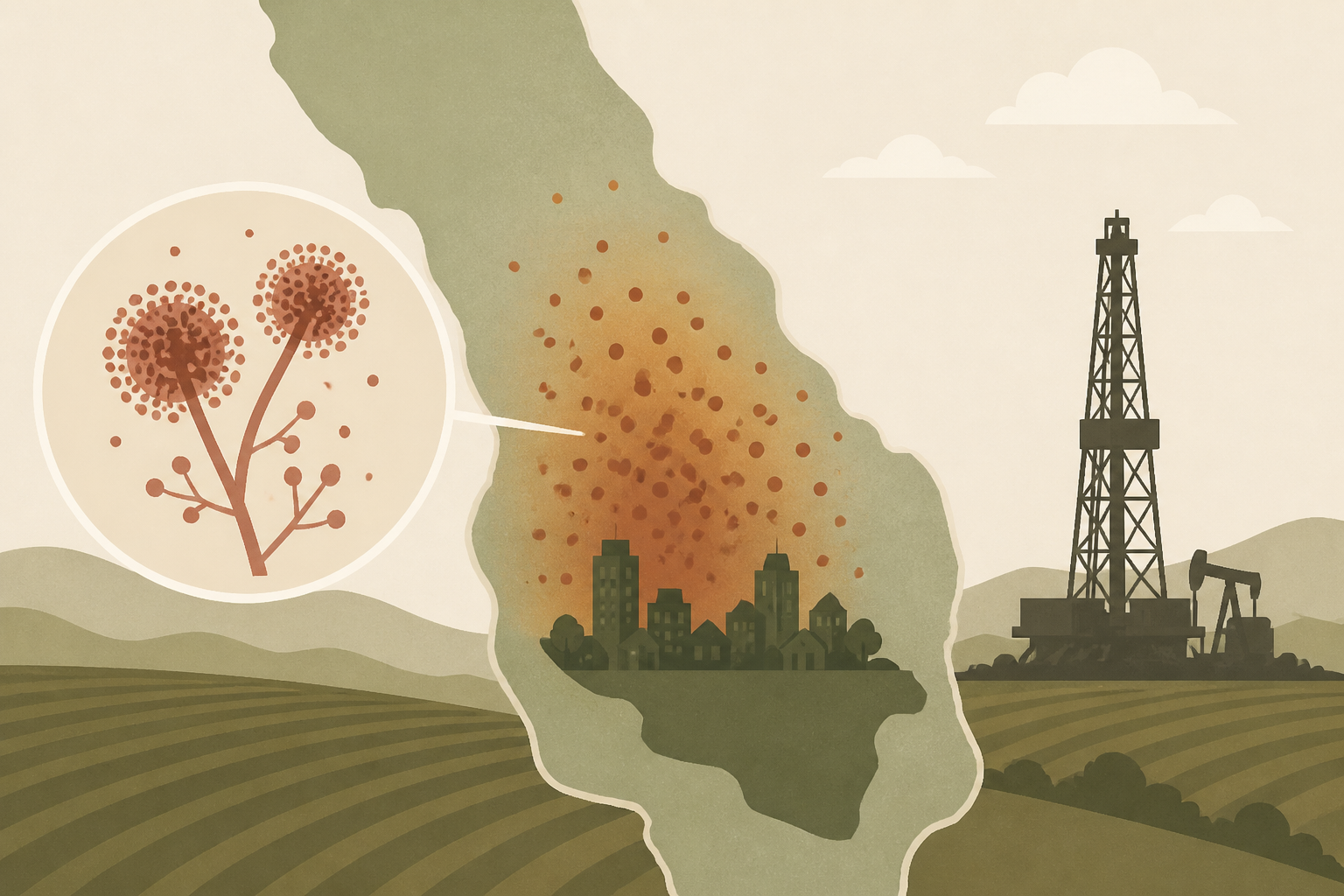
- Taylor's research highlights rodent burrows as key reservoirs for the fungus, finding it even in urban areas along rivers and streams, and notes that disturbances to these burrows or soil during construction, wind, or wildfire can aerosolize spores and spread the disease.
- A study led by Taylor's team found that living within three miles of new oil and gas drilling sites in Kern County raises valley fever risk by 12.5%, linking soil disturbance from construction activities to increased infection rates.
- Valley fever can cause severe respiratory issues in about 40% of infected individuals, with 10% developing serious lung problems and 3-5% experiencing disseminated disease affecting the brain and spine, which can be fatal if untreated.
- While Taylor emphasizes the role of rodents in the fungus's life cycle, some experts argue that construction and soil disturbance are the primary drivers of outbreaks, urging stronger public health measures such as wetting soil during construction, educating residents on mask use, and timing construction to reduce risk.


