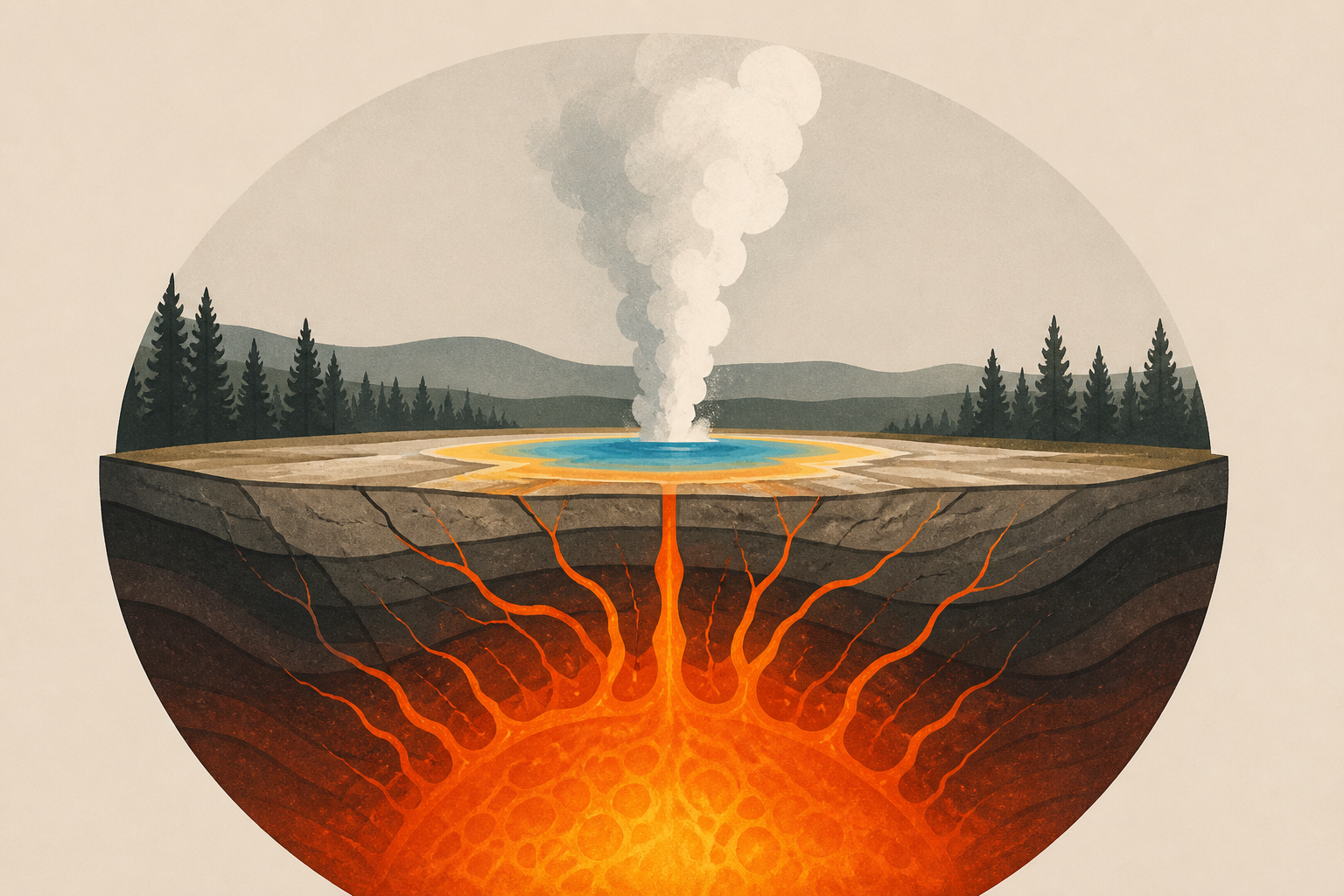
AI Image
What if Yellowstone ‘blows’? A look at the worst-case scenario
FOX Weather • • science
Key Points:
- Around 631,000 years ago, a massive volcanic eruption at Yellowstone in northwestern Wyoming spread ash across much of North America and altered the global climate, an event with catastrophic potential if repeated today.
- In a hypothetical worst-case scenario, UK scientists outline a timeline where escalating seismic activity and ground deformation lead to a super-eruption, causing widespread ashfall, infrastructure damage, and mass evacuations affecting hundreds of thousands of people.
- The eruption would produce violent explosions, sending ash and pumice high into the atmosphere, disrupting air travel, darkening skies, and severely impacting agriculture, power, water, and communication systems across North America.
- Weeks to months after the eruption, ash accumulation and contamination would continue to challenge recovery efforts, with health systems overwhelmed by respiratory issues and global food supplies disrupted by agricultural losses.
- Long-term effects could last decades, including altered climate patterns, damaged farmland, and ongoing health risks from ash exposure, while the eruption's geological impact would remain visible for millions of years.


