AI Generated Image
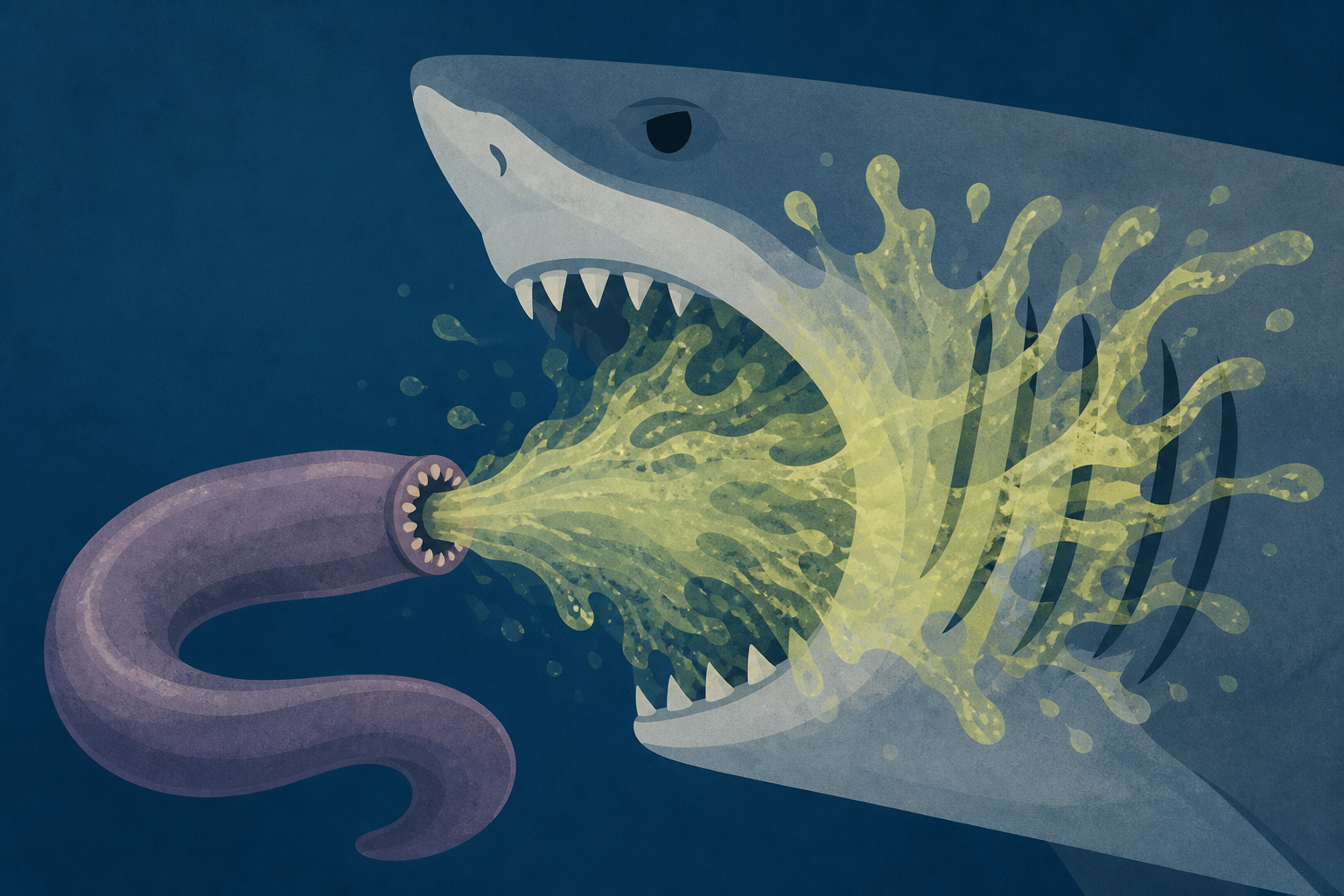
When a shark bites down on a hagfish, the fish floods its attacker's mouth with slime in a fraction of a second, clogging the predator's gills until it gags and lets go
Space Daily • • science
Key Points:
- Hagfish defend themselves by releasing a rapid-expanding slime that clogs the gills of predators, causing them to convulse and retreat, as confirmed by 2011 deep-sea footage capturing multiple such encounters.
- The slime is produced from two glandular components—protein fibers and mucin—that combine with seawater to form a fibrous, mucus-rich network, expanding to nearly a liter almost instantly upon contact.
- This defense mechanism activates only upon direct pressure from a predator’s bite, making it an efficient, last-moment deterrent rather than a constant barrier.
- Despite producing slime that clogs gills, hagfish avoid self-suffocation by knotting their bodies to scrape off slime and by their slower breathing method compared to fast-swimming fish.
- The protein fibers in hagfish slime have inspired materials science research due to their strength and toughness, comparable to spider silk, offering potential for new, environmentally friendly biomaterials.


