AI Image
Who won and lost after Trump cut EV tax credits?
USA Today • • business
Key Points:
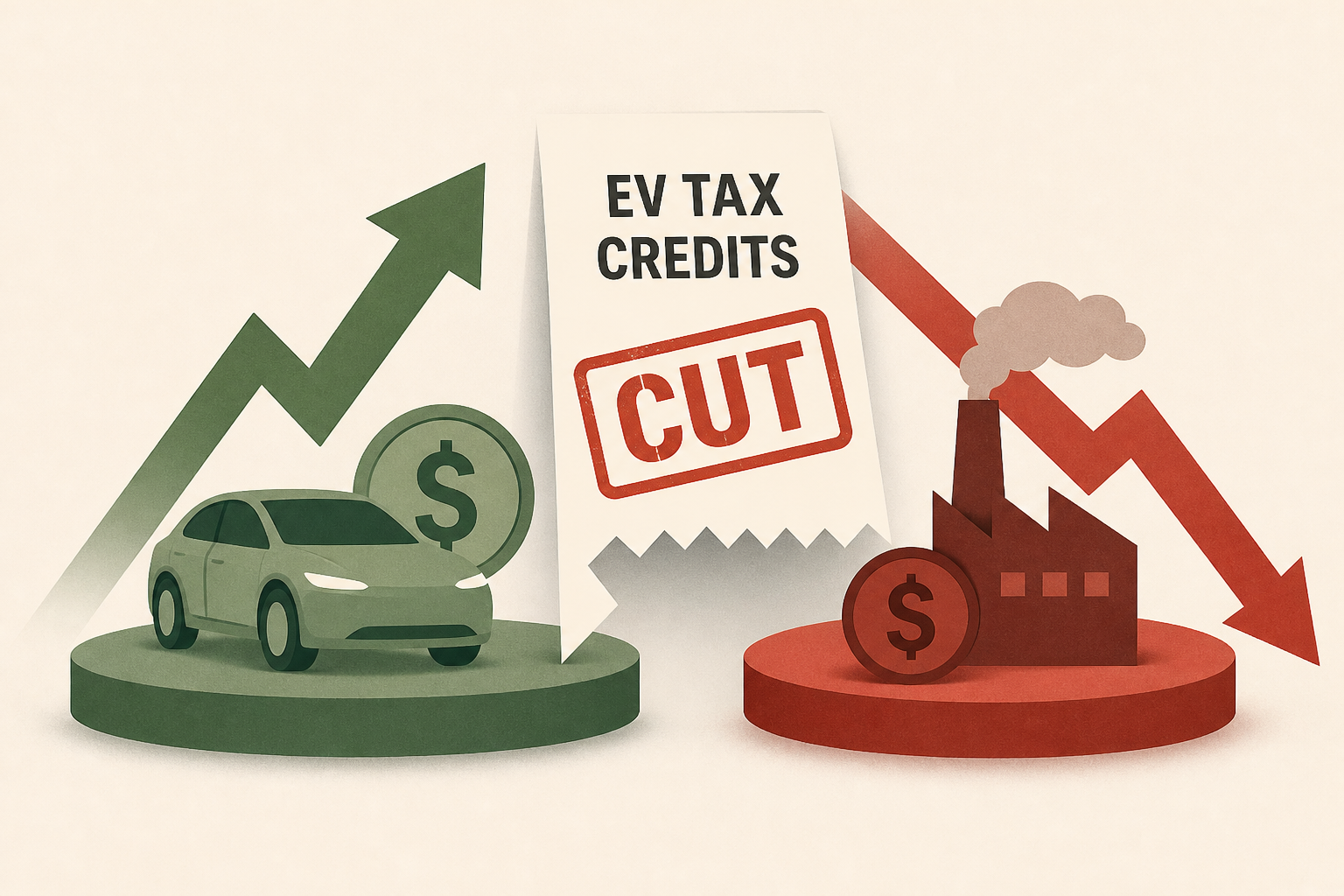
- The elimination of the $7,500 federal EV tax credit in September 2025 caused a significant decline in new electric vehicle sales in the U.S., with EVs dropping from nearly 10% to 6% of new car sales in 2026.
- Automakers with strong hybrid lineups, such as Toyota and Hyundai, benefited from shifting consumer demand toward fuel-efficient hybrids amid rising gas prices, while Detroit automakers like GM and Ford faced challenges due to their heavy investments in an all-electric future.
- Tesla remains the dominant EV seller with over 242,000 sales in the first half of 2026, leveraging its decade-long head start and established customer base despite the loss of federal tax incentives.
- GM and Ford saw notable declines in EV sales compared to 2025, with GM’s first-half 2026 EV sales dropping below 57,000 from over 78,000 the previous year, and Ford shifting its F-150 Lightning from fully electric to a hybrid Extended Range Electric Vehicle (EREV).
- Volkswagen, after years of investing in EVs, ended production of its U.S.-built ID.4 electric crossover, leaving the ID. Buzz minivan as its only domestic electric model, reflecting challenges in maintaining EV momentum post tax-credit removal.


