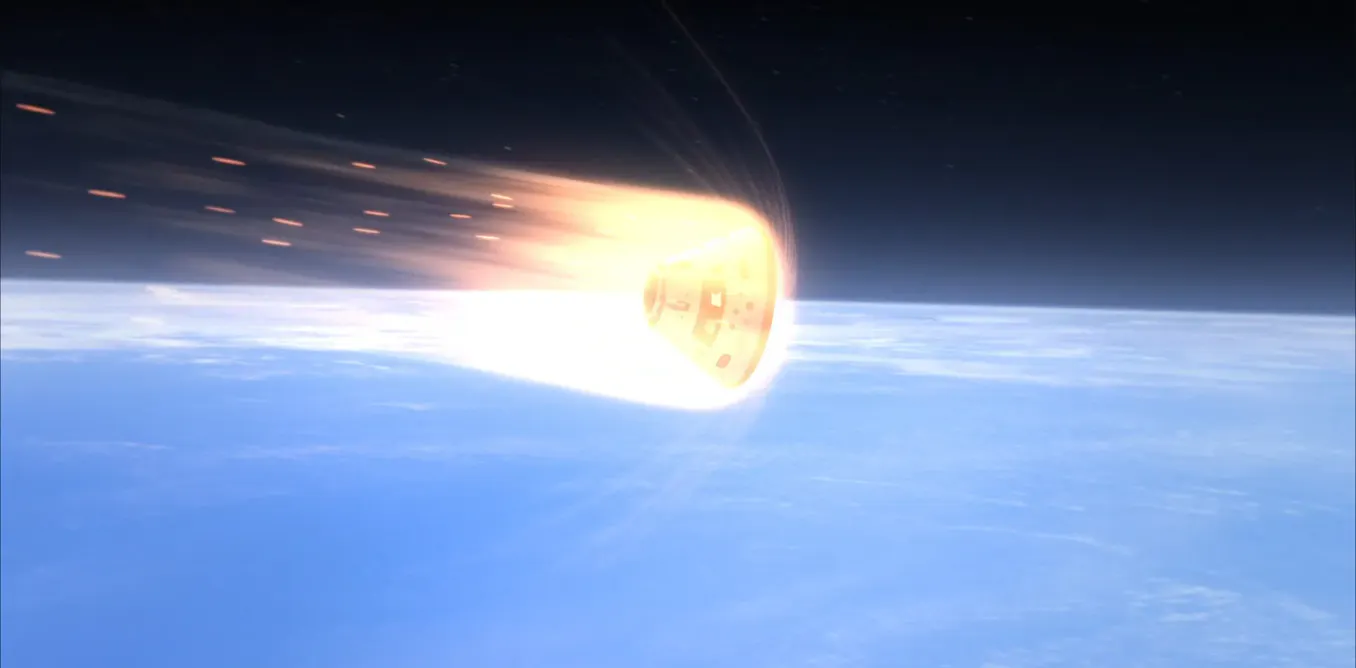
Artemis II crew will endure 3,000°C on re-entry. A hypersonics expert explains how they will survive
The Conversation • • nation
Key Points:
- The Artemis II crew set a new human distance record from Earth at 406,771 km during their Moon mission and are now preparing for a high-speed, hypersonic re-entry into Earth's atmosphere, culminating in a Pacific Ocean splashdown near California on April 10.
- The Orion capsule will re-enter Earth's atmosphere at speeds exceeding 11 km/s (40,000 km/h), generating extreme heat up to 10,000°C and creating a plasma sheath that temporarily blocks communications.
- To survive the intense heat and deceleration forces, the spacecraft uses a specially designed thermal protection system with an ablative heat shield made of AVCOAT, a material evolved from Apollo-era technology.
- Unlike uncrewed capsules that experience very rapid, high-g deceleration, Orion employs lift forces to slow down more gradually, keeping g-forces at manageable levels for the crew over several minutes.
- Following unexpected heat shield material loss during Artemis I’s re-entry, engineers adjusted the Artemis II re-entry trajectory to reduce pressure buildup and improve heat shield performance, enhancing crew safety for the mission’s final phase.


