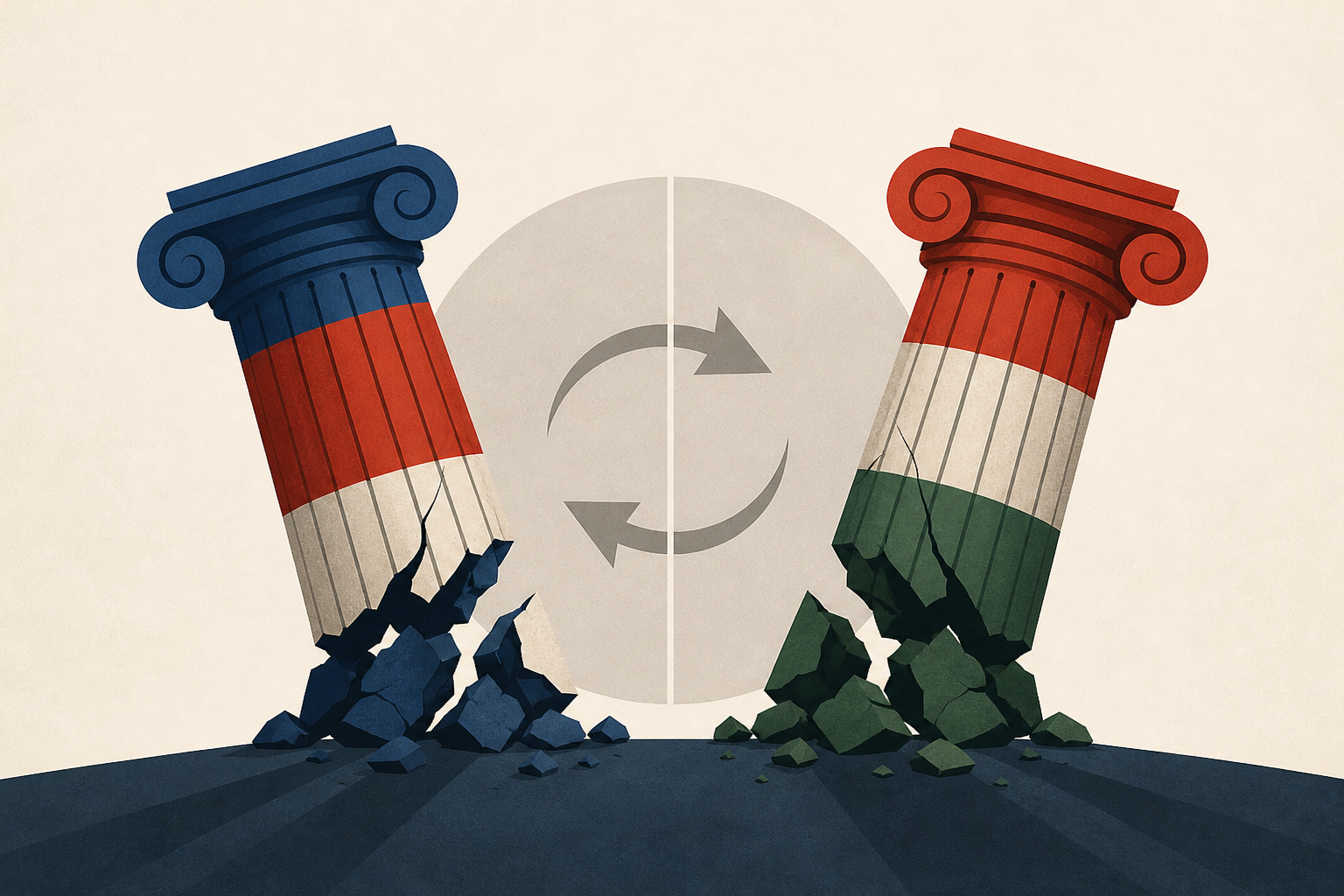
AI Image
How the downfall of Serbia's Vučiċ mirrored that of Hungary's Orbán
BBC • • world
Key Points:
- Serbian President Aleksandar Vučiċ and Hungarian Prime Minister Viktor Orbán, once powerful nationalist leaders allied in business and politics, were both ousted within a year by popular movements—Orbán in April and Vučiċ in Serbia's recent parliamentary elections.
- The opposition victories in both countries were driven by tech-savvy young voters who used AI tools and large-scale election monitoring to prevent voter intimidation and fraud, with significant cooperation between Hungarian and Serbian civic groups.
- Both leaders conceded defeat peacefully despite expectations, with speculation of communication between them to avoid violence; Vučiċ denied prior contact but acknowledged a post-concession conversation with Orbán.
- The new Serbian Student List and Hungary's Tisza party, despite differing leadership styles, won strikingly similar parliamentary majorities (140 seats in Serbia's 250-seat parliament and 140 in Hungary's 199-seat parliament).
- Both Vučiċ and Orbán now face potential prosecution for corruption and abuse of power, with judicial bodies in Serbia and Hungary equipped to pursue such cases, partly spurred by incidents like the deadly Novi Sad railway station collapse linked to corruption involving Hungarian companies close to Orbán.


