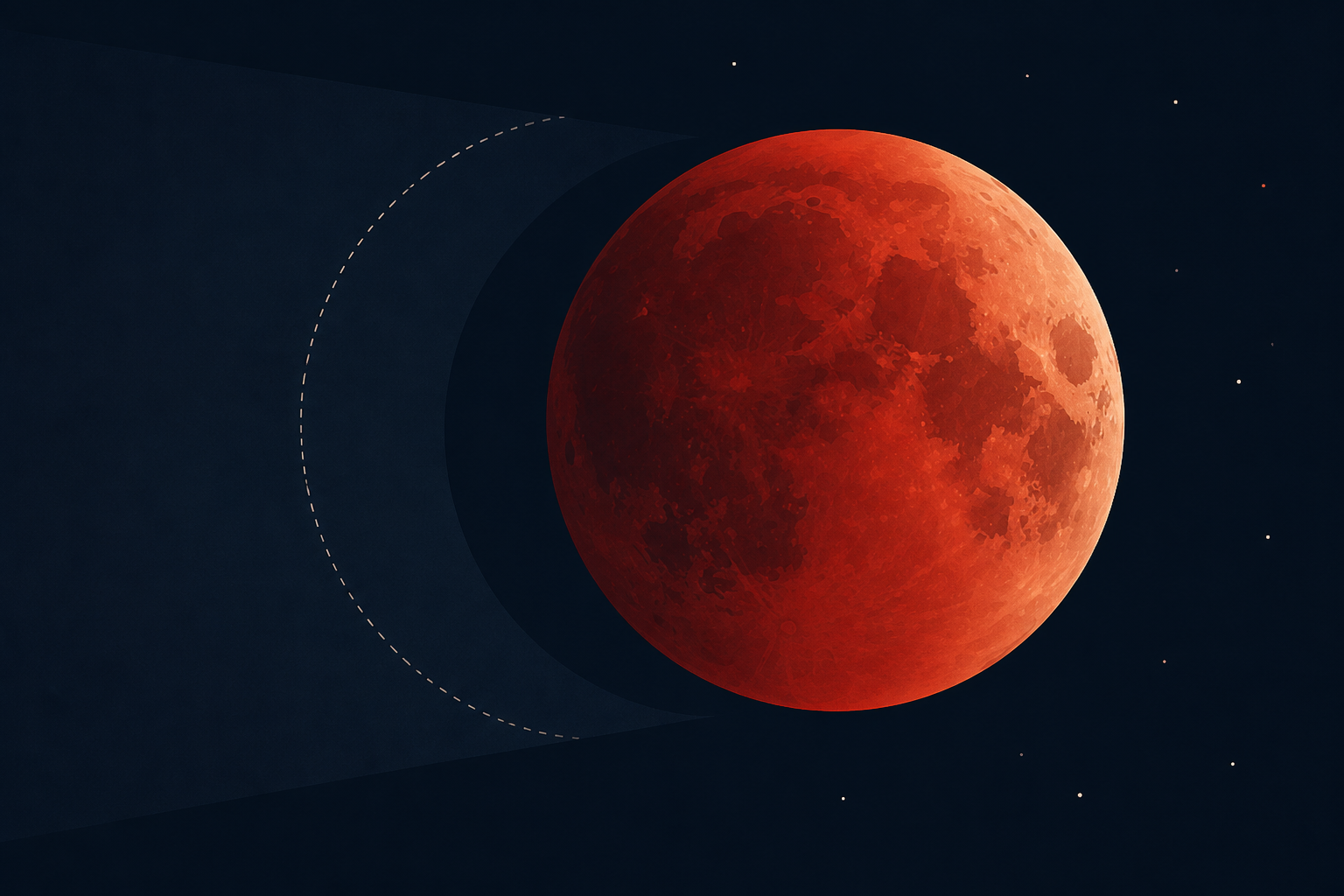
AI Generated Image
See photos of blood moon eclipse
The Boston Globe • • science
Key Points:
- A "blood moon" lunar eclipse occurred Thursday night into early Friday, visible in parts of the United States and globally, as the moon took on a reddish hue due to Earth's atmospheric effects.
- The red color results from sunlight filtering through Earth's atmosphere, with blue light scattered out and red light reflecting onto the moon's surface; more atmospheric dust or clouds intensify the red appearance.
- In New England, 96% of the moon was covered by Earth's umbral shadow, though cloud cover hindered visibility there; clearer views were available in South America, Europe, western Asia, Africa, and Antarctica.
- This event was the second lunar eclipse of 2024, following one on March 3, with the next penumbral lunar eclipse expected in February 2027.
- The article includes photographs capturing the eclipse and provides contact information for the author, Marianne Mizera.


